
Reviewed · 4WD SAFARI TOURS
4×4 Safari HEREAKIMANU Tour in the Heart of Tahiti
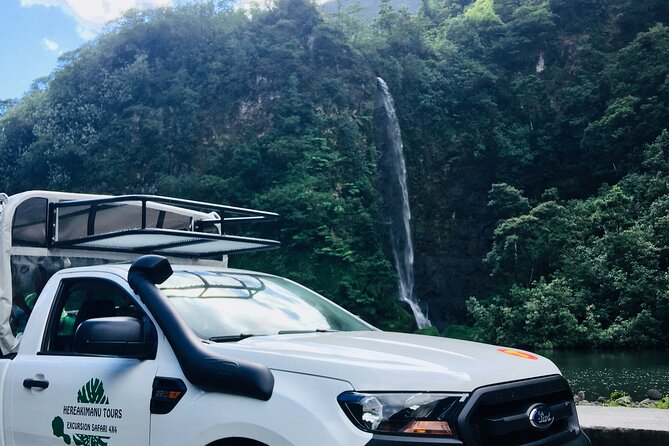
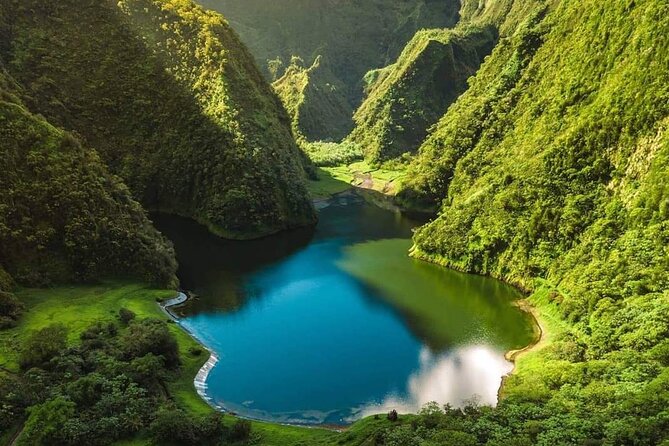
Tahiti gets wilder beyond the coast. This full-day 4×4 trip crosses the island through the Papenoo Valley, following rough mountain tracks to waterfalls, volcanic viewpoints, a traditional village, rivers, and Tahiti’s only natural high-altitude lake. It gives you access to places that are difficult to reach in an ordinary rental car.
I like the spectacular scenery, especially the waterfalls and high mountain views, and I like the guides’ strong sense of place. Leonie, Manua, Tere, Loraina, and Temaeva are praised for sharing Tahitian history, plants, music, dance, and local customs. The main drawback is simple: this is an intensely bumpy ride, sometimes for most of the eight-hour day.
If you want a smooth sightseeing trip, choose another outing. If you want to see Tahiti’s rugged interior and do not mind potholes, river crossings, narrow tracks, rain, and a few jolts, this is one of the island’s most memorable ways to travel.
In This Review
- Key points about the Papenoo Valley safari
- Starting along Papeno’o’s black-sand coast
- Entering the Papenoo Valley by open-air 4×4
- Three hours in Tahiti’s volcanic heart
- Fare Hape and traditional life in the valley
- Crossing toward Vaihiria and the western side
- What the ride really feels like
- Guide quality and the human side of the day
- Is the $143.27 price good value?
- Who should book this Tahiti safari?
- Should you book the Hereakimanu 4×4 Safari?
- FAQ
- How long does the 4×4 Safari Hereakimanu tour last?
- Where does the tour begin?
- What places does the tour visit?
- Is lunch included?
- How many people can join the tour?
- Is the ride suitable for people with back problems?
- What happens if the weather is bad?
Key points about the Papenoo Valley safari
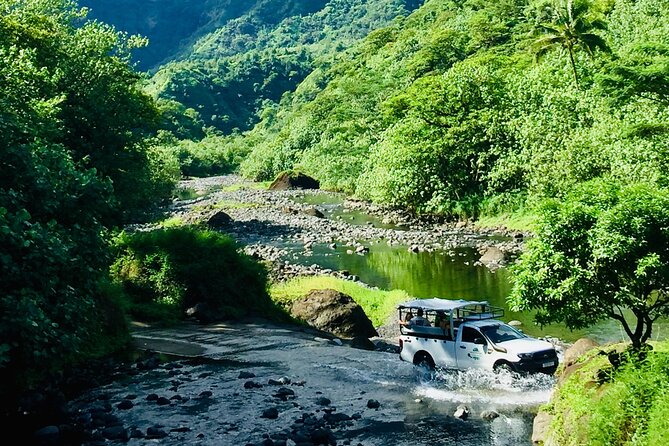
- The road is the adventure: Expect rough, rutted mountain tracks, deep potholes, switchbacks, puddles, and occasional river crossings.
- The interior scenery is the reward: Waterfalls, volcanic slopes, black-sand beaches, forest, and views toward Vaihiria fill the day.
- Guides add real local context: Leonie and other guides explain Tahitian culture, plants, birds, history, and traditional life.
- You cross Tahiti from east to west: The route begins near Papeno’o and continues through the island’s volcanic center.
- The group is small: A maximum of eight people keeps the experience more personal and makes it easier to hear the guide.
- Pack for a long outdoor day: Lunch and drinks are not included, the vehicle is open-air, and both sun and heavy rain are possible.
Starting along Papeno’o’s black-sand coast
The day begins at 8:30 a.m., with pickup available, and starts on Tahiti’s east coast near Papeno’o. This side of the island feels more exposed to the ocean, with black-sand beaches and well-known surf spots.
The early coastal section helps you get your bearings before the route turns inland. Short stops of about five to ten minutes are built into the drive for photos and explanations. These pauses matter because the day covers a lot of ground, and they give you a chance to stretch before the rougher mountain roads begin.
I would not book this trip only for the beaches. The coast is an attractive opening, but the main event is the interior. Still, the contrast is useful: within a few hours, you move from oceanfront Tahiti to steep volcanic country where roads become tracks and waterfalls appear on the mountainsides.
More 4WD trips into the interior:
- Crossing Island of Tahiti 4×4 Mountain, Waterfall, River, Basins
★ 4.5 · 532 reviews - Découvrez le Mana durant la traversée de Tahiti en 4×4 Safari
★ 5.0 · 456 reviews - Crossing Over Tahiti Island Safari 4×4
★ 4.5 · 307 reviews
Entering the Papenoo Valley by open-air 4×4
Once the vehicle turns into the Papenoo Valley, the character of the day changes. The paved road gives way to narrow gravel and dirt routes with potholes, deep ruts, puddles, and frequent bends. Some sections climb and drop along the rim of the volcanic caldera.
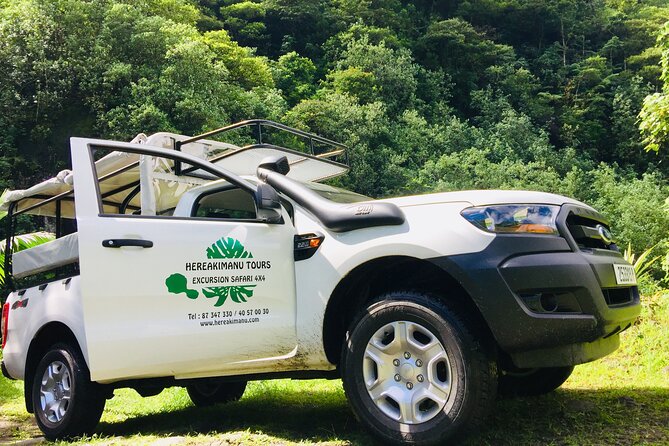
This is not a token off-road segment added to an ordinary sightseeing tour. The rough track continues for much of the day. Several people found the bouncing exhausting, and even one person who normally does not suffer from motion sickness felt unwell afterward. The open-air vehicle also means you are exposed to sun and rain, although the roof can be adjusted when the weather changes.
The payoff is access. You reach mountain viewpoints, waterfalls, forest areas, and remote stretches that you would not comfortably reach on your own. In wet weather, the waterfalls can be especially impressive, with water streaming down the dark mountain walls. Rain may block some views, but it can also make the valley feel more dramatic.
Your guide does more than point out scenery. Leonie is praised for explaining native and non-native plants, birds, rituals, local customs, and the way people have lived in the valley. One excursion included sightings of grey-green fruit doves and hawks. You might also hear stories about the area’s volcanic formation and see how quickly tropical vegetation takes over every open patch of ground.
Three hours in Tahiti’s volcanic heart
The longest section of the day is spent inside the Papenoo Valley, with roughly three hours allocated to exploring this central area. The route reaches the caldera, the broad volcanic basin that gives the interior its steep walls and dramatic scale.
The views are the reason to tolerate the road. You may look across layers of mountain ridges, see waterfalls dropping from high slopes, and follow a track that seems to disappear into the forest. At times, the road is so narrow that passing another vehicle would be difficult. The driver’s skill matters here, and the guides are repeatedly praised for handling the road carefully and confidently.
This is also where the tour feels most educational. The best guides switch easily between scenery and culture. Leonie has been praised for speaking several languages, including English, French, Tahitian, and Spanish. Other guides, including Manua and Tere, are noted for their calm driving and clear explanations.
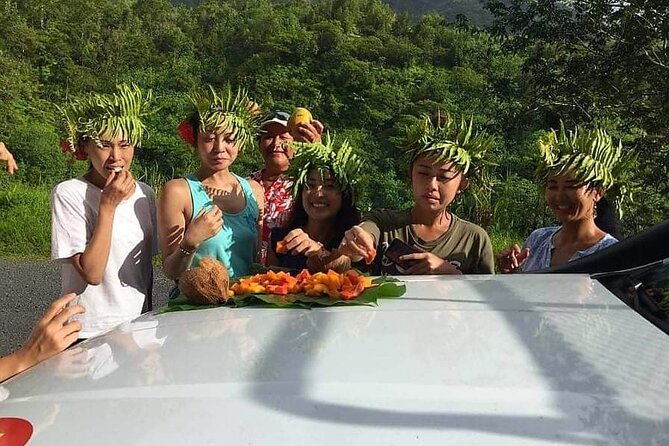
The cultural touches can make the day more than a scenic drive. Guides have demonstrated Tahitian dances, played ukulele, sung during lunch, used a large shell to show how sound echoes through the mountains, and helped children make flower crowns. These details are not guaranteed on every departure, but they show the kind of personal connection the experience can offer.
Fare Hape and traditional life in the valley
After reaching the central section of the route, the excursion stops at Fare Hape for about an hour. This authentic village is presented as a place connected to the valley’s past and traditional way of life.
Fare Hape gives the day a human side. Until this point, the focus is mostly on rock, water, plants, and volcanic slopes. Here, you get a chance to think about how people have used and cared for this difficult terrain. The guide’s explanations about local history, daily life, and Polynesian customs help connect the setting to the people who know it best.
The stop may also be used for a picnic or a swim in a river area. One particularly well-received experience included swimming at a sacred place surrounded by high mountains. Treat that as a possible feature rather than a promise for every departure, since weather, route conditions, and local circumstances can affect the day.
A local fruit platter is included as a snack. It is a pleasant touch, but it is not lunch. You will stop at a supermarket to buy whatever food and drinks you want, so bring enough for a long day. I would make that shopping stop count. Eight hours in a bouncing vehicle, especially in warm weather, is not the time to rely on a small snack.
More lagoon safaris:
- Bora Bora by Land and Sea: 4WD Safari and Snorkel
★ 4.7 · 80 reviews - Bora Bora: Full day Lagoon Safari & Lunch on a Motu – ST
★ 4.9 · 443 reviews - Bora Bora Half Day 4X4 Island Safari Tours
★ 5.0 · 431 reviews - Aqua Safari Introductory Helmet Dive (Underwater Walk)
★ 5.0 · 428 reviews
Crossing toward Vaihiria and the western side
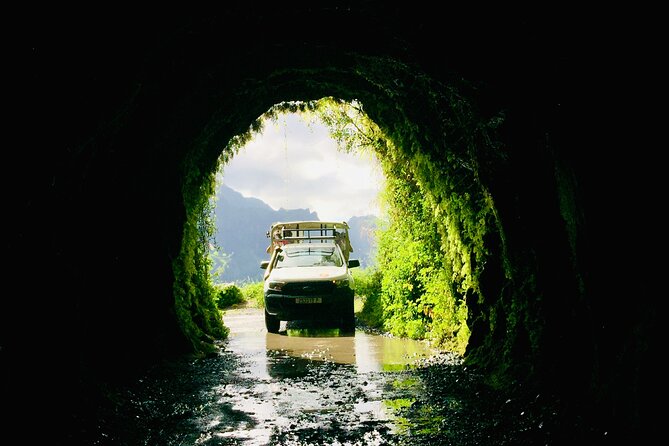
The route then reaches a tunnel that connects the east coast with the west coast. This section offers views toward Vaihiria, Tahiti’s only natural high-altitude lake. The tunnel crossing and mountain road are among the more unusual parts of the excursion.
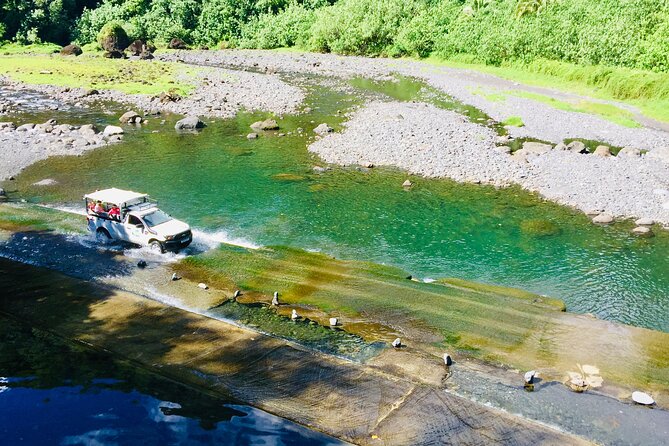
You also cross the island, making this more than a valley outing. The drive gives you a broad sense of Tahiti’s interior shape and the way the volcanic center divides the coastal settlements. The route includes narrow tracks, steep sections, switchbacks, and sometimes water on the road. In wet conditions, some areas can feel intimidating, and one account described crossing a dam wall as unsettling.
The changing weather is part of the setting. You may begin under sunshine, drive into heavy rain, and emerge beneath clearer skies. Guides adjust the vehicle’s cover as conditions change. Rain can reduce distant views, but it often brings out the waterfalls. Several outings had poor weather and still delivered a strong day because the moving water became one of the main sights.
Allow for the possibility that the trip will run longer than the advertised eight hours. Some departures have taken around nine hours. The route is remote, and conditions can slow the vehicle. Avoid booking a tight evening plan, airport transfer, or dinner reservation immediately afterward.
What the ride really feels like
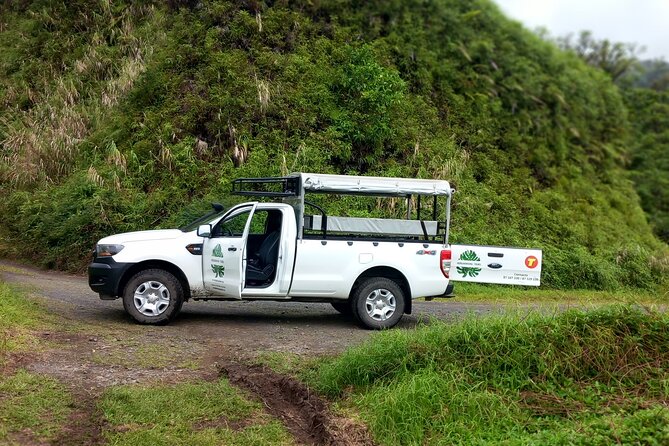
The most important thing to understand is that this is a rough ride, not a comfortable coach tour. You sit in the back of an open-air safari-style vehicle, with the road sending repeated jolts through the seats. On the roughest parts, you may brace yourself, bounce into the person beside you, or feel every large pothole.
The tour information calls for moderate physical fitness and specifically warns against the experience for pregnant people and those with back problems. That advice deserves attention. Motion sickness can also be an issue, even for people who rarely experience it.
I would bring a light rain layer, sun protection, water, and clothing you do not mind getting damp or dusty. Keep your belongings secure, since luggage is not supported. The open vehicle is part of the appeal, giving you better air and broad views, but it offers less protection than a standard enclosed car.
This ride suits you if you see discomfort as part of an adventure. It does not suit you if you need a gentle road surface, predictable weather, or a quiet seat for the whole day. The driver may be excellent, but no driver can turn a crater track into a smooth road.
Guide quality and the human side of the day
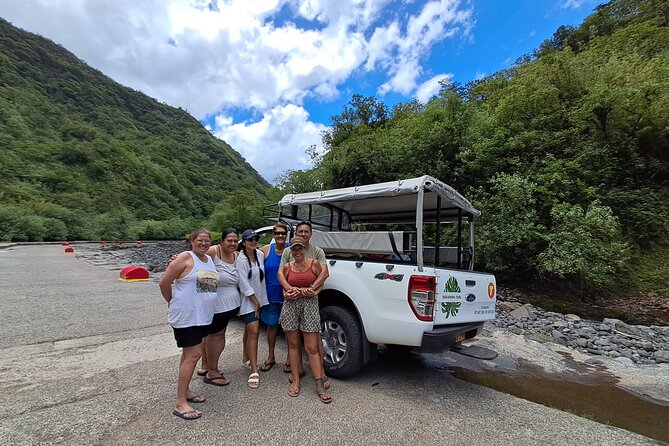
The guides are one of the strongest reasons to book. Leonie receives especially warm praise for her friendliness, cultural knowledge, driving, and ability to make the route feel personal. She has shared information about native plants, local history, traditional life, and Polynesian culture while also adding music and dance.
Manua is praised for guiding safely over difficult roads. Tere is noted for adjusting the vehicle cover during rain and sunshine, explaining the route in French and English, and adding small demonstrations and music. Temaeva is described as bringing strong knowledge of Tahiti and its wider culture. The specific guide and language may vary.
One practical point: a German-language departure did not always provide a German-speaking guide. The guide on that outing spoke French and English instead. If language is important to you, confirm it before booking rather than assuming the advertised language will always be available.
The small maximum group of eight helps. You have a better chance of hearing explanations and asking questions than on a large bus. In some cases, the operator has continued with only two passengers, although the stated minimum is three, so do not count on a private tour unless the provider confirms it.
Is the $143.27 price good value?
At $143.27 per person, the price is reasonable for an approximately eight-hour guided trip that covers Tahiti’s coast, central valley, volcanic interior, and westward crossing. You are paying for a full day, a specialist vehicle, a local driver-guide, access to difficult roads, and interpretation that would be hard to arrange independently.
The value is strongest if you want the interior. A rental car will not give you the same confidence on the rough mountain tracks, and a normal road tour will not reach the same parts of the valley. The guide also adds something you cannot get from scenery alone: explanations of plants, birds, culture, history, and local traditions.
Remember to add lunch and drinks to your budget. A supermarket stop is provided, but food is not included. The fruit platter is a snack, not a meal.
The price is less attractive if you mainly want easy coastal sightseeing. You could spend the day seeing Tahiti by smoother roads and avoid the physical strain. This tour charges you, in effect, for access to the difficult places. If you do not care about those places, the value drops quickly.
Who should book this Tahiti safari?
I would recommend it to active visitors who want to see Tahiti beyond the beaches and resorts. It is particularly good for people interested in volcanic geology, waterfalls, birdlife, tropical plants, Polynesian culture, and remote mountain scenery.
It can work well for families with older children who can handle a long, rough ride. One family outing included a ten-year-old who enjoyed learning about local culture and making a flower crown. Still, parents should judge their child’s tolerance for bouncing, rain, and a full day in an open vehicle.
Honeymooners can enjoy it too, especially if they specifically want a rugged day rather than a polished luxury excursion. Just know that you may return tired, dusty, wet, or all three.
I would not recommend it for pregnant people, anyone with back problems, anyone prone to serious motion sickness, or anyone who needs a smooth and predictable outing. The moderate fitness warning is not just routine wording here.
Free cancellation is available up to 24 hours before the start time. The experience depends on suitable weather and at least three passengers. If poor weather or an insufficient group causes cancellation, you can be offered another date, a different route, or a refund.
Should you book the Hereakimanu 4×4 Safari?
Book it if your idea of a good Tahiti day includes waterfalls pouring down volcanic slopes, river stops, rough tracks, local stories, and a guide who may pick up a ukulele. You will see a side of the island that is difficult to reach without specialist transport.
Skip it if your back, stomach, or patience dislikes eight hours of jolting. The scenery is excellent, but the road is not a minor inconvenience. It is half the experience.
For the right person, this is a strong-value way to reach Tahiti’s wild center, learn from local guides, and cross the island in a single memorable day. Pack lightly, buy lunch, protect yourself from sun and rain, and accept that the best views may come with the biggest potholes.
FAQ
How long does the 4×4 Safari Hereakimanu tour last?
The tour lasts approximately eight hours, starting at 8:30 a.m. Some outings can take closer to nine hours because of road conditions and the remote route.
Where does the tour begin?
The experience begins near Papeno’o on Tahiti’s east coast and ends back at the meeting point. Pickup is offered.
What places does the tour visit?
The route includes Papeno’o, the Papenoo Valley, the caldera, Fare Hape village, the tunnel between the east and west coasts, and views toward Vaihiria, Tahiti’s only natural high-altitude lake.
Is lunch included?
No. Lunch and drinks are not included. The group stops at a supermarket so you can buy what you need, and a platter of local fruit is provided as a snack.
How many people can join the tour?
The vehicle can carry a maximum of eight travelers. A minimum of three passengers is required for the tour to operate.
Is the ride suitable for people with back problems?
No. The route is very rough, with potholes, ruts, narrow mountain roads, switchbacks, and river crossings. The experience is not recommended for pregnant people or those with back problems, and anyone prone to motion sickness should consider the conditions carefully.
What happens if the weather is bad?
If poor weather or another force majeure event prevents the tour from operating, you may be offered a different date or route, or a refund. The same options apply if the minimum number of passengers is not reached.
Recently added around Tahiti
- Tahiti: Private Half Day Culture and Nature Highlights Tour★ 5.0 · 3 reviews
- Papeete Market Place★ 3.0 · 3 reviews
- Tahiti: Northeast Coast Waterfalls&Viewpoints Half Day Tour★ 5.0 · 3 reviews
- AOA Polynesian Forests – Hiking Sanctuary Biodiversity Tahiti★ 5.0 · 3 reviews
- Private Transfer Papeete Urban Area to Tahiti Airport PPT by Van★ 5.0 · 3 reviews
- Small Group Shared Tahiti Circle Island Waterfalls and Views★ 4.5 · 3 reviews
- Tahiti: Full Day Tour with Private Flight EN Cessna (Moorea & Tahiti)★ 3.5 · 3 reviews
- Papeete City Tour, 3hours (on Tahiti)★ 5.0 · 3 reviews
4WD Safari Tours, compared.
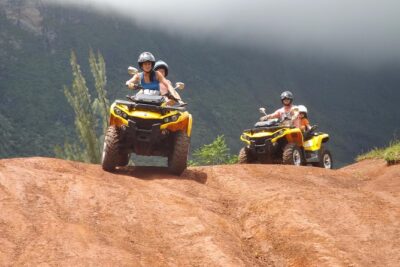
Moorea 4WD Tour Inc. Belvedere, Pineapple Farm, Magic Mountain…
Read our review →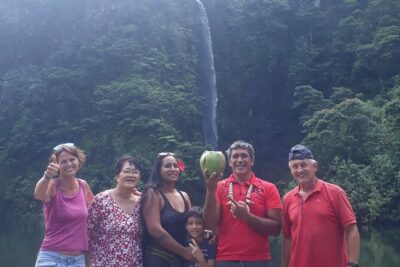
Crossing Island of Tahiti 4×4 Mountain, Waterfall, River, Basins
Read our review →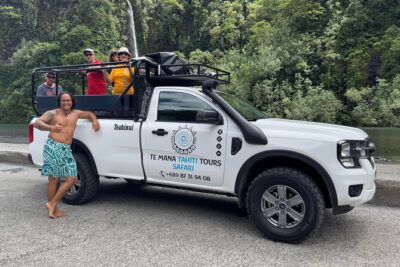
Découvrez le Mana durant la traversée de Tahiti en 4×4 Safari
Read our review →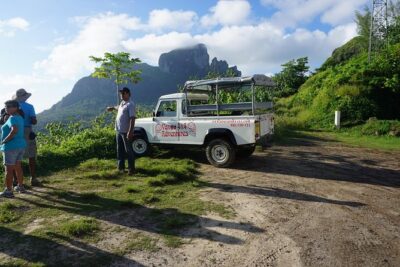

Moorea Cruise Ships: 4×4, Belvedere, Pineapple, & Magic Mountain
Read our review →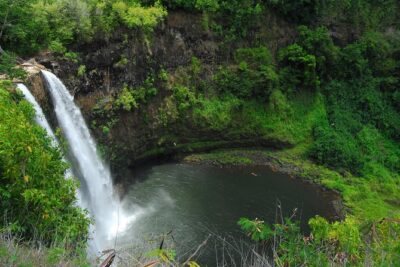

Half-Day Open-Air 4WD Safari with Hotel Transfers
Read our review →Browse the lists this tour appears in