
Reviewed · WHALE WATCHING
Swimming with Whales in Moorea (Half Day tour)
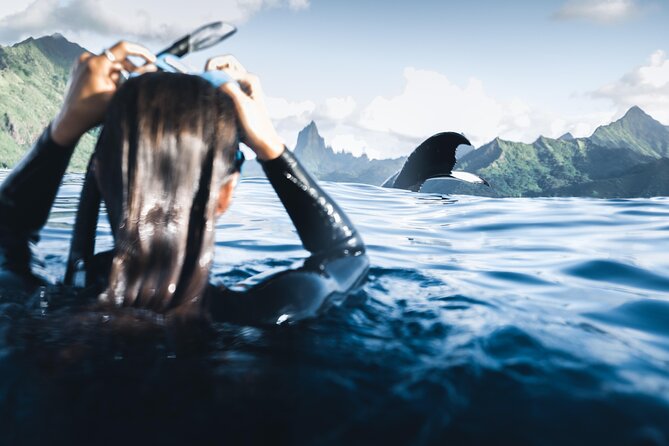
Whales can turn a morning into a lifelong memory. This four-hour Moorea Expedition trip takes you into open water during humpback season, with the chance to swim near whales, dolphins, stingrays, sharks, and other marine life. I like the small six-person boat, which gives you more room and more personal attention than a crowded wildlife cruise. I also like the crew’s repeated focus on animal welfare and clear water-safety instructions.
The main catch is simple: you must be a strong swimmer with snorkeling experience. The ocean can be choppy, whales do not follow a schedule, and a sighting is never guaranteed. The tour costs $305.30 per person, so you are paying for a rare wildlife opportunity, not a guaranteed performance.
In This Review
- Key points to know before booking
- Why Moorea is a special place for whale swimming
- Four hours on the water, from meeting point to return
- What swimming beside a humpback really demands
- A small boat changes the feel of the experience
- The guides and captain are a big part of the value
- Whale encounters, dolphins, rays, and sharks
- Photos, wetsuits, and what to pack
- Is $305.30 a fair price?
- Who should book this Moorea whale tour?
- Should you book it?
- FAQ
- How long is the swimming with whales tour in Moorea?
- When can you swim with humpback whales on this tour?
- How many people are allowed on the boat?
- Do I need to be a strong swimmer?
- Can non-swimmers join the experience?
- What equipment and supplies are included?
- What happens if the weather is bad or I need to cancel?
Key points to know before booking
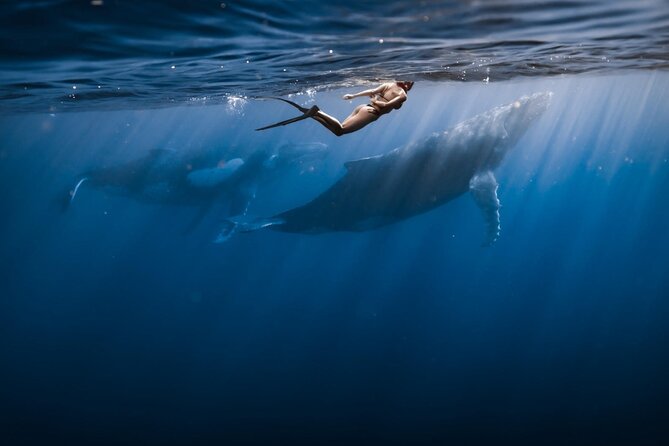
- Humpback season runs from July through late November, with whale swimming as the main goal of the expedition.
- Only six people per boat may swim with humpback whales under 2025 regulations, keeping the group unusually small.
- Strong open-water swimming and snorkeling skills are required, and conditions can make the outing more demanding.
- Non-swimmers can remain on the boat, although a separate non-swimming tour is available.
- A wetsuit can help you avoid wearing a life jacket, since French law requires one unless you are wearing a shorty or full wetsuit.
- Whale encounters are not guaranteed, but dolphins, stingrays, sharks, and turtles may add to the morning.
Why Moorea is a special place for whale swimming
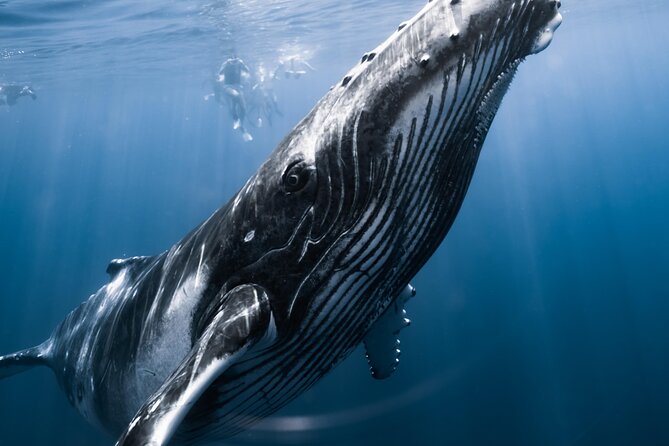
Moorea sits in French Polynesia, surrounded by warm Pacific waters and dramatic marine life. From July to late November, humpback whales are present in the area, and this is the season when the operator aims to bring swimmers near them.
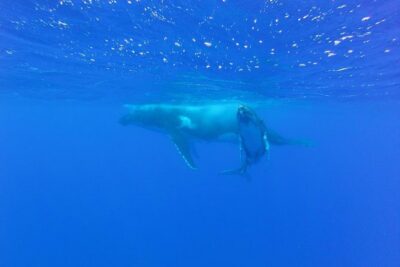
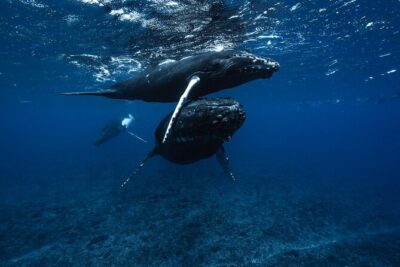
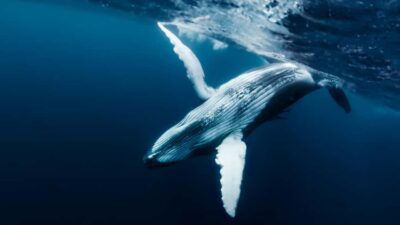
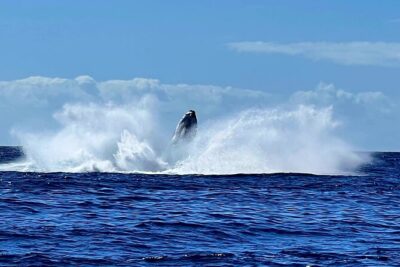
The appeal is not simply seeing a whale breach from a boat. The unusual part is the chance to enter the sea and watch a humpback pass through the water near you. Several strong experiences have involved mothers and calves, sometimes more than once during the same trip. That can mean a brief look, or it can mean a whale gliding past before disappearing into the blue.
Still, you need to keep your expectations sensible. Wildlife is not a stage show. One outing recorded no whales but did include dolphins, while other trips produced several humpbacks, including mothers with calves. Ocean conditions and whale behavior shape the day more than the timetable does.
I like that the stated goal is to find humpback whales, while the crew also watches for other animals. That makes the trip less one-dimensional. If whales stay out of reach, dolphins, stingrays, blacktip sharks, or turtles may still give you something memorable to see.
More Whale Watching in Moorea
- Humpback whale watching and marine life in Moorea
★ 5.0 · 199 reviews - Half day whale tour 4h00
★ 4.5 · 181 reviews - Private tour observing and swimming with humpback whales in Moorea
★ 5.0 · 126 reviews
Four hours on the water, from meeting point to return
The tour begins and ends at the Moorea Expedition meeting point in French Polynesia. Pickup is offered, which can make the morning easier if you are staying at a resort or another local accommodation. One booking included an on-time resort taxi, so it is worth confirming pickup details when you arrange the trip.
Once aboard, the crew provides snorkeling equipment and flotation devices. Bottled water is included, but you need to bring your own sunblock and towel. A wetsuit is not included, and rental options are handled through a third party.
The early part of the outing is spent searching for signs of marine life and assessing the sea. The captain may look for whales from the boat before positioning the group for a possible water entry. This waiting period can feel slow if you are eager to swim, but patience is part of any wild-whale encounter.
When the crew finds a suitable animal and conditions allow, the guide gives instructions before anyone enters the water. You may make more than one entry. Some outings have included two or three water entries, while others have been limited by sea conditions or animal behavior.
A good guide does not rush this part. The most praised outings involved careful positioning, clear directions, and enough space for the whales to move freely. The crew’s job is not just to get you close. It is to help you observe without putting people or animals at needless risk.
After the whale portion, the boat may look for other marine life. Stingrays and small sharks have appeared on some trips, along with dolphins and turtles. The exact order and mix depend on what is in the water that day.
The activity lasts about four hours, then returns to the starting point. That makes it easier to fit into a larger Moorea plan, though you should not schedule an important activity immediately afterward if you are prone to seasickness or need extra time to dry off and recover.
What swimming beside a humpback really demands
The words strong swimming abilities should be taken seriously. This is not a shallow-water snorkeling stop where you can casually drift beside a reef. You are in open ocean, using a mask and snorkel, often with moving water and animals that can change direction quickly.
You should feel comfortable swimming without a pool wall, standing area, or easy exit nearby. You also need to follow instructions quickly, stay alert to the people around you, and swim with enough confidence to keep up with the group.
The effort is usually described as easy to moderate, but conditions can make it harder. Choppy seas can increase fatigue and make mask-and-snorkel breathing less comfortable. One person specifically advised taking a seasickness pill before departure because the water was rough. That is practical advice if you already know you are sensitive to boat motion, though the tour information does not promise calm seas.
The life-jacket rule deserves attention. French law requires life jackets on whale-swimming tours unless you are wearing a neoprene wetsuit. A shorty or full wetsuit qualifies for the exemption. Life jackets are available aboard, and a wetsuit may be rented from a third party.
This is not just a technical detail. A standard life jacket can make swimming and snorkeling feel bulky, especially when you are trying to move naturally in open water. If you prefer to swim without one, arrange a wetsuit ahead of time rather than assuming one will be waiting on the boat.
The operator also offers a non-swimming tour for people who want to watch from the boat. On this half-day excursion, people who cannot enter the water may remain aboard and enjoy the views, but the strongest value of this particular product is clearly aimed at confident swimmers.
A small boat changes the feel of the experience
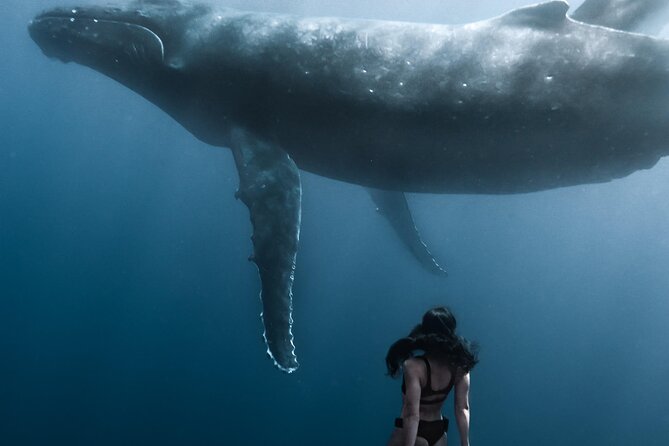
The maximum group size is six people. That is a major advantage for a wildlife trip where timing and positioning matter.
A small group means less crowding around the boat and more room for the guide to explain what is happening. It also gives the captain a better chance to position everyone where they can see, rather than managing a large line of swimmers.
The small boat does not guarantee a whale encounter. It does make the experience feel more personal when the animals appear. Several outings included more than one entry into the water, and a compact group can help those entries happen with less fuss.
There is one language consideration. The crew can provide information in both French and English, but one English-speaking passenger felt left out during casual conversation among French-speaking people on board. Instructions were given when needed, yet the social conversation was not always inclusive.
If you speak only English, ask at the start how explanations will be handled. The crew has shown the ability to give directions in English, but that does not necessarily mean every informal conversation will be bilingual.
More whale trips:
- Half Day Small Group Whale Watching
★ 5.0 · 88 reviews - Whale watching and snorkelling in Moorea
★ 5.0 · 64 reviews - Whale watching in Moorea
★ 5.0 · 58 reviews - WHALE TOUR – Watching and Swimming with Whales
★ 5.0 · 52 reviews
The guides and captain are a big part of the value
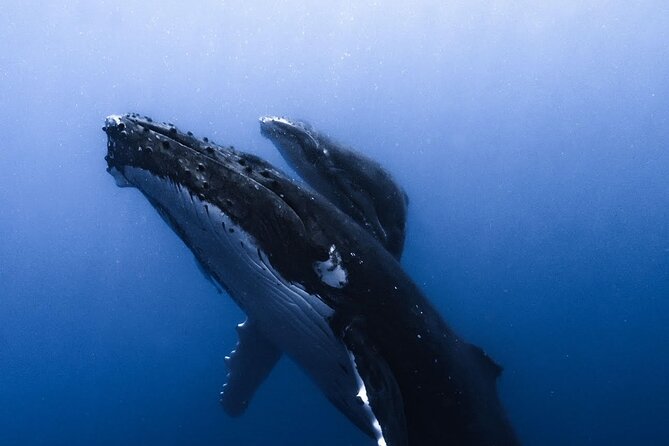
The crew receives especially strong praise for safety, whale awareness, and reading the ocean. Guide Johnny is singled out for his warmth and clear explanations, while Joe and Laura are praised for their work in the water. Grace is mentioned in connection with photographs on one outing.
The most important quality is not charm. It is judgment. The crew must decide when to enter, where to place swimmers, how long to remain, and when to back away. Good whale encounters depend on those choices.
The captain also plays a key role. One account describes the captain and Johnny tracking changing whale movements and finding a better place for a second entry. That kind of work is easy to overlook from the passenger seat, but it can make the difference between a distant sighting and a close, respectful view.
The best moments are not always dramatic. A whale may rest below the surface, then rise and pass in front of you. A mother and calf may swim together. You might see a whale directly beneath the group before it moves on.
The crew’s stated priority is the safety of both people and animals. That balance matters. You want a close view, but you should not expect the guide to force an encounter or chase a whale simply to create a better photograph.
Whale encounters, dolphins, rays, and sharks
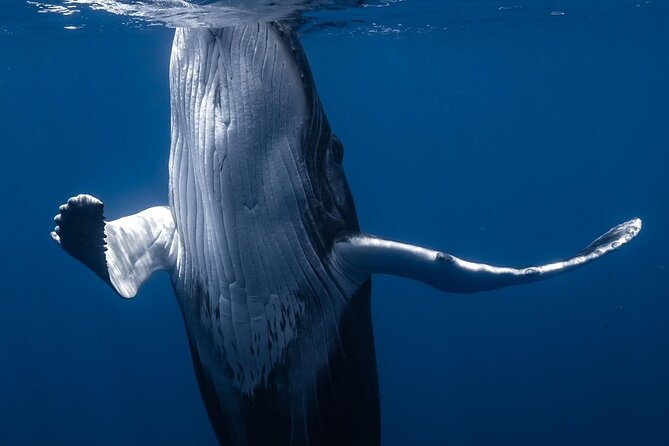
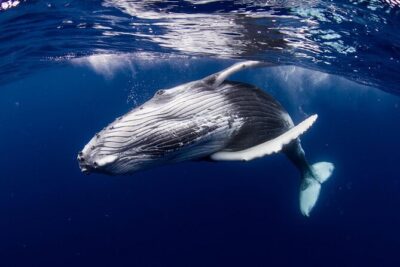
Humpback whales are the main attraction from July through late November. Several strong outings involved mothers and calves, including one with a mother and two calves. Other accounts describe multiple whales, including a male and female resting together.
A calf encounter can be especially moving, but it is also a reminder that the animals need space. The guide should control the pace and distance, not the swimmers. Follow directions even if you are tempted to move closer for a photograph.
Dolphins offer a useful backup, though backup makes them sound ordinary. One outing with rough seas and no whales still included swimming with dolphins, which turned an uncertain day into a worthwhile one.
Stingrays and blacktip sharks may appear later in the outing. Turtles have also been seen. These sightings are possible, not promised, so consider them part of the wider marine-life experience rather than guaranteed stops on a fixed route.
You may also see whales from the boat without swimming with them. That can happen when the animals are moving too quickly, resting in a position that is not suitable for entry, or when sea conditions make swimming unsafe.
Photos, wetsuits, and what to pack
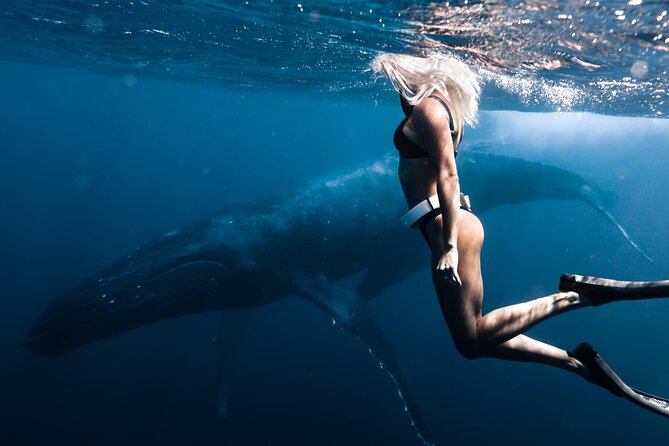
Bring sunblock and a towel. Neither is included. Bottled water and snorkeling equipment are provided, along with flotation devices and life jackets.
A waterproof camera or GoPro is worth bringing if you own one. Underwater photographs have captured whale encounters, but you should not rely on the operator to provide a professional photo package. One person specifically advised bringing your own means of recording the experience.
A camera can also distract you. The most powerful moments may last only a few seconds, and trying to frame every shot can make you miss the animal itself. I would use a wrist strap, keep the camera simple, and treat pictures as a bonus.
Think carefully about seasickness. The boat and ocean can move, and at least one outing had very rough conditions. If you are prone to motion sickness, prepare before departure according to your normal routine. Do not wait until the boat is already moving.
Arrange a wetsuit in advance if you want to avoid a life jacket. The operator has life jackets on board, but wetsuits come through a third party. A wetsuit may also help you stay comfortable during repeated entries into the water.
Is $305.30 a fair price?
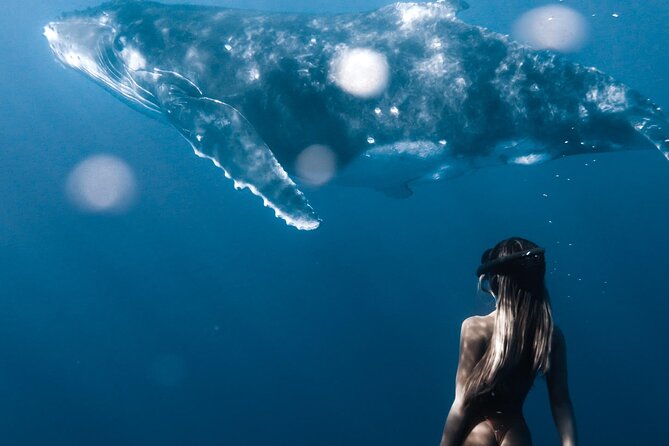
At $305.30 per person, this is a major activity purchase. The four-hour duration is not especially long, but the cost reflects the small group, boat operation, equipment, guide support, and the chance to swim near humpback whales during a limited seasonal window.
I see the value if swimming with whales is one of your main reasons for visiting Moorea. A mother and calf passing nearby is the sort of experience that can define an entire French Polynesia trip. The small group also gives this outing more appeal than a cheaper, crowded boat ride.
The value is less certain if you need a guaranteed wildlife encounter or if you are not comfortable in open water. You could spend the morning in rough seas and see dolphins rather than whales. That is not a failure of the crew, but it is a risk you are accepting at this price.
The experience has a 4.7 rating from 264 reviews, with 90 percent recommending it. That points to a very strong record, while the less positive accounts are useful for setting expectations: communication may not always feel equal for English-only passengers, and photography support may not match what you hope for.
Who should book this Moorea whale tour?
I would recommend it to confident swimmers who want a close wildlife experience and understand that nature sets the schedule. It is especially appealing during the July to late November whale season, when humpbacks are the main target.
It also suits people who value a small group and close guide attention. Couples, friends, and active families with strong swimmers may appreciate the compact boat, though every participant needs to meet the physical demands.
I would choose the separate non-swimming option if you mainly want to watch whales from a boat. You can remain aboard on this excursion, but the trip is built around entering the water, so non-swimmers may not get the same value.
I would not book it if you are uncomfortable snorkeling in open ocean, cannot swim strongly, or need a guaranteed schedule. The operator requires good physical fitness, and the sea can be challenging.
Should you book it?
Book this tour if a respectful, close look at humpback whales is high on your Moorea wish list and you can swim confidently in open water. The strongest combination is a small six-person group, a careful crew, and the chance to see mothers and calves at close range.
Before paying, check the seasonal dates, confirm pickup, ask about English instruction if needed, and arrange a wetsuit if you prefer not to wear a life jacket. Bring sunblock, a towel, and your own waterproof camera if you want pictures.
Go in expecting a real wildlife outing, not a guaranteed show. If the whales cooperate, this could be the emotional high point of your stay. If they do not, dolphins, rays, sharks, turtles, and the open-water setting may still make the morning worthwhile.
FAQ
How long is the swimming with whales tour in Moorea?
The tour lasts approximately four hours and returns to the Moorea Expedition meeting point.
When can you swim with humpback whales on this tour?
The main whale-swimming season runs from July through late November.
How many people are allowed on the boat?
The activity has a maximum of six travelers. From 2025, government regulations allow only six guests per boat to swim with humpback whales.
Do I need to be a strong swimmer?
Yes. Strong swimming ability and snorkeling experience are required if you want to enter the water with whales. The ocean effort may be easy to moderate, but conditions can make it more challenging.
Can non-swimmers join the experience?
People who cannot enter the water with whales can remain on the boat and watch. A separate non-swimming tour is also available.
What equipment and supplies are included?
Snorkeling equipment, flotation devices, life jackets, and bottled water are available or included. Sunblock and towels are not included.
What happens if the weather is bad or I need to cancel?
You can cancel at least 24 hours before the start time for a full refund. If poor weather cancels the tour, you will be offered another date or a full refund.
More Half-Day
- Franckyfranck Tours Moorea – Half day Tours
★ 5.0 · 817 reviews - Half Day Tour : Moorea Snorkeling & Sailing on a Catamaran named Taboo
★ 5.0 · 529 reviews - Moorea: Half-Day Open-Air 4WD Safari with Hotel Transfers
★ 4.6 · 240 reviews - Half-Day Guided Hike to Afareaitu Waterfall
★ 5.0 · 177 reviews
Recently added around Moorea
- 2-hour Private Sunset Cruise★ 5.0 · 3 reviews
- Private Guided Tour around the Moorea Island★ 5.0 · 3 reviews
- Lagoon and Marine Wildlife Tour in Moorea★ 5.0 · 3 reviews
- Whale Watching Shared Half Day★ 5.0 · 3 reviews
- Watch and Swim with Humpback Whales in Moorea★ 5.0 · 3 reviews
- 4 Hour Ariki Fishing Activity in Moorea★ 5.0 · 3 reviews
- Yoga at sunrise at Sofitel Moorea, overlooking Tahiti★ 5.0 · 3 reviews
- Unique photo shoot in the heart DE Moorea: Beach & mountain combo★ 5.0 · 3 reviews
Whale Watching, compared.
Humpback whale watching and marine life in Moorea
Read our review →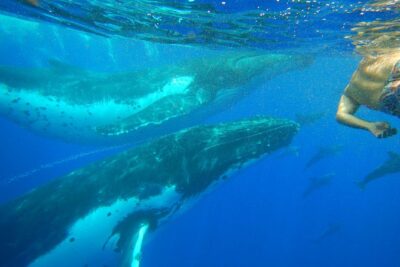
Private tour observing and swimming with humpback whales in Moorea
Read our review →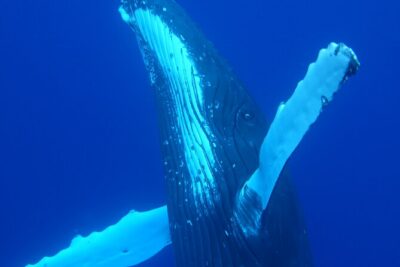
Browse the lists this tour appears in