
Reviewed · WALKING TOURS
Private 2 Hour Walking Tour in Papeete
Papeete tells its story on foot. This private two-hour walk gives you a close look at Tahiti’s capital through its parks, government buildings, cathedral, market, and town hall, with guide Pauline adding the historical links that are easy to miss on your own. With room for only two participants, the experience feels more like a personal introduction than a standard city tour.
I especially like the small private format, which should make it easier to ask questions and adjust the conversation to your interests. I also like the mix of places: you get Tahitian history, French Polynesian government, religion, architecture, and daily market life in one compact outing. The main drawback is the pace. Five stops in two hours leave limited time at each place, and weekends or public holidays require a change to the planned government-building stop.
- Maximum of two participants: A quiet, personal setting with plenty of time for questions.
- Pauline’s visual teaching style: She uses a tablet and photographs to explain sights and past events.
- Five central Papeete stops: Bougainville Park, the Assembly, cathedral, market, and town hall provide a useful city overview.
- Market time included: The Municipal Market gives you a look at local food, crafts, flowers, and everyday commerce.
- Weekend adjustment: The Assembly of French Polynesia is closed on weekends and public holidays, so Jacques Chirac Place may replace it.
- Two-hour return walk: The tour begins and ends at the Papeete Tourism Office on the waterfront.
In This Review
- Why This Small Papeete Tour Works Well
- Starting Beside the Waterfront at Bougainville Park
- The Assembly of French Polynesia and Tahitian Power
- The Catholic Cathedral and Tahiti’s Religious Changes
- Twenty Minutes Inside the Municipal Market
- Papeete Town Hall and Colonial Architecture
- How the Two Hours Are Actually Used
- Is $130 Per Person Good Value?
- Who Will Get the Most From Pauline’s Tour?
- Practical Details Before You Reserve
- Should You Book This Papeete Walking Tour?
- FAQ
- How long is the private Papeete walking tour?
- How many people can participate?
- What is the price?
- Where does the tour begin?
- Where does the tour end?
- Which places are visited?
- Is admission included?
- What happens if the Assembly of French Polynesia is closed?
- Do I need to bring an umbrella?
- Can I cancel for a refund?
Why This Small Papeete Tour Works Well
Papeete is often treated as a starting point for the rest of Tahiti. That is a mistake. The capital is not a giant sightseeing city, but its center brings together the island’s political past, colonial-era buildings, religious changes, public markets, and modern Tahitian life.
This tour gives you a framework for understanding those pieces. Pauline explains the people and events connected with each stop, rather than simply pointing out buildings. One especially useful detail from the feedback is her use of a tablet with photographs. That matters in Papeete, where the present-day city does not always make its earlier story obvious.
The private setup is the tour’s clearest advantage. Since the booking is limited to two people, you do not have to compete with a large group to hear or ask questions. If you want to ask about Tahitian rulers, French influence, Christianity, local government, or the market, you can do so without holding up a crowd.
Pauline’s English was also praised for being clear, and her guiding style comes across as friendly and polished. She is described as especially good at combining facts with local encounters and small surprises along the route. That makes this a strong choice if you want context, not just a list of names and dates.
Starting Beside the Waterfront at Bougainville Park
The meeting point is the Office du Tourisme, also called Fare Manihini, on the Papeete waterfront at Boulevard de la Reine Pōmare. This is a practical place to begin because the tour starts in the central area and returns there at the end.
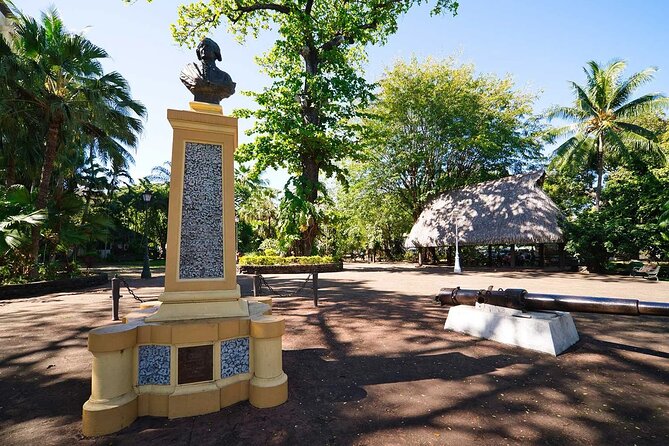
The first stop is Bougainville Park, where Pauline introduces Captain Bougainville, other explorers, and the missionaries who shaped the island’s contact with Europe. The park gives the tour an easy opening: you begin outdoors, in a public space, with the wider story of Tahiti before moving into government, religion, commerce, and architecture.
The scheduled time is about 15 minutes. That is enough for a clear introduction, but not a long lecture. I would treat this as a scene-setting stop rather than a major park visit. The value is in learning why the names connected with Tahiti matter and how exploration and missionary activity changed the islands.
If you prefer tours that stick to present-day food and shopping, this opening history lesson may feel slow. If you want to understand the forces behind modern French Polynesia, it gives the rest of the walk more meaning.
More walks:
- Papeete : walking tour
★ 4.9 · 69 reviews - Shared 2 Hour Papeete Walking Tour
★ 5.0 · 13 reviews - Aqua Safari Introductory Helmet Dive (Underwater Walk)
★ 5.0 · 428 reviews
The Assembly of French Polynesia and Tahitian Power
The Assembly of French Polynesia is scheduled for about 20 minutes, making it the longest formal building stop. Here, Pauline explains how Tahitian political life developed through different periods, including the roles of chiefs, monarchs, and modern government.
This is a useful stop because political history can be hard to grasp from a casual walk. A building may look attractive, but knowing how authority changed over time gives it purpose. You get a basic guide to the movement from traditional leadership and monarchy toward the current political system.
The stop is free, as are the other building visits included in the tour. The information provided does not promise interior access to every building, so you should think of this part as an explanation of the site and its importance, with entry included where a building visit is available.
Pay attention to the calendar. The Assembly is closed on weekends and public holidays. On those days, the route can use Jacques Chirac Place instead. That is not a flaw in the tour, but it is an important planning point. If seeing the Assembly is a priority, book a weekday and check the local date carefully.
The Catholic Cathedral and Tahiti’s Religious Changes
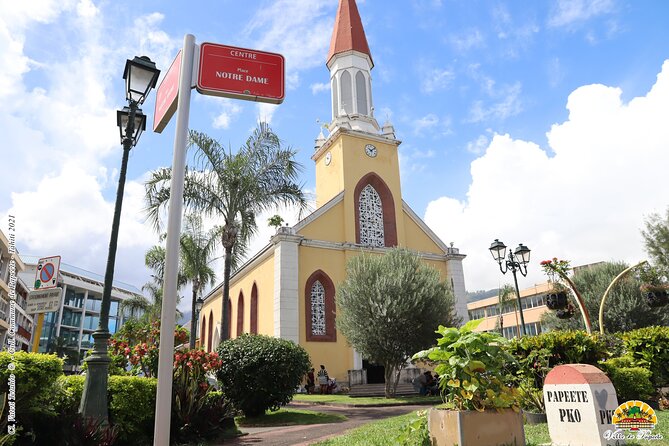
The Roman Catholic Archdiocese of Papeete, commonly known through the city’s Catholic Cathedral, receives about 15 minutes. Pauline uses the stop to explain the arrival of Protestantism and later Christianity in the islands, along with the religious changes that followed.
This part helps correct a common mistake: treating Tahitian culture as something separate from later outside influence. Religion played a major role in the island’s modern story, and the cathedral offers a concrete place to discuss it.
Fifteen minutes is enough for an introduction to the building and its religious background. It is not enough for an extended architectural study, a long quiet visit, or a detailed survey of every religious tradition in French Polynesia. The strength here is the connection between the site and the larger story.
You may appreciate Pauline’s approach if you like history presented through actual places. The cathedral is not just another stop on a list. It becomes a way to understand how belief, colonial contact, and public life intersected in Papeete.
Twenty Minutes Inside the Municipal Market
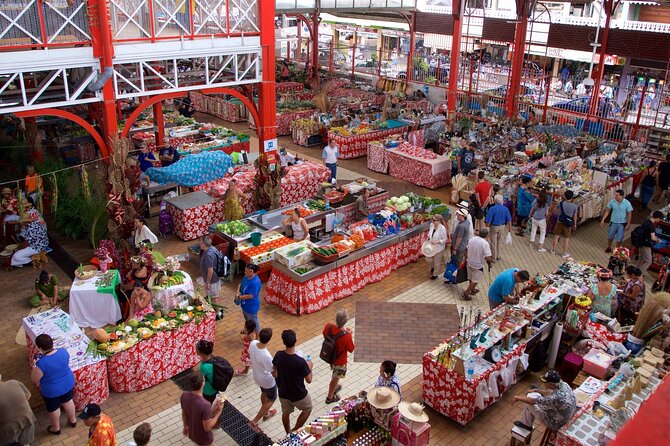
The Municipal Market is likely to be the most lively part of the walk. The planned visit lasts about 20 minutes, giving you time to see different sections and get a sense of the range of Tahitian daily life.
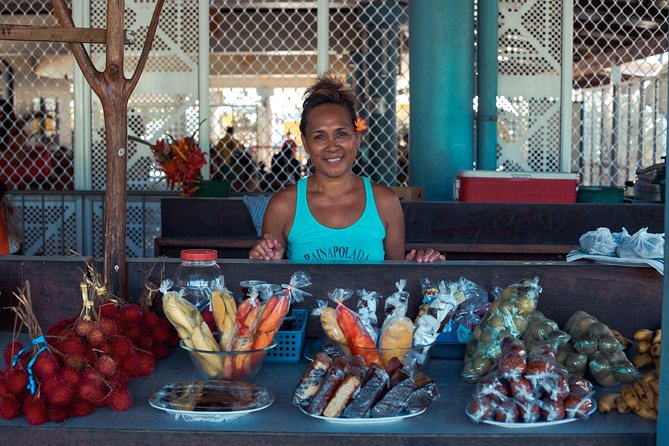
The market is described as having several zones that reflect different parts of local culture. You might find food, flowers, crafts, and other products associated with the city and the islands. The supplied information does not specify exact vendors or products available on the day, so treat the market as a changing public place rather than a fixed display.
This stop adds balance to the formal buildings. Bougainville Park, the Assembly, cathedral, and town hall tell institutional stories. The market shows how the city functions in ordinary life. It is also the best point in the tour for browsing, taking photographs, and deciding if you want to return later on your own.
Twenty minutes goes quickly. If you are serious about shopping, food, or photography, you may want to return after the tour. The guided visit gives you orientation, but it is not designed as a long market-shopping session.
The market was one of the most praised parts of the experience, along with Papeete’s parks, flowers, wildlife, and shopping. That combination makes the stop more than a quick pass through stalls. It gives you a direct look at the city’s social energy.
A few more ways to spend a day in Papeete
- 2 hours discovery tour of Moorea by Jet Ski
★ 5.0 · 63 reviews - Moorea Solo or Twin 2 hours Jet Ski Tour
★ 5.0 · 34 reviews - Eco guided excursion to the lagoon of Moorea in a transparent kayak Afternoon 2h
★ 5.0 · 23 reviews - Medium Magical Combo in Moorea of 2 hours of Jetski and 3h30 of Quad
★ 5.0 · 19 reviews
Papeete Town Hall and Colonial Architecture
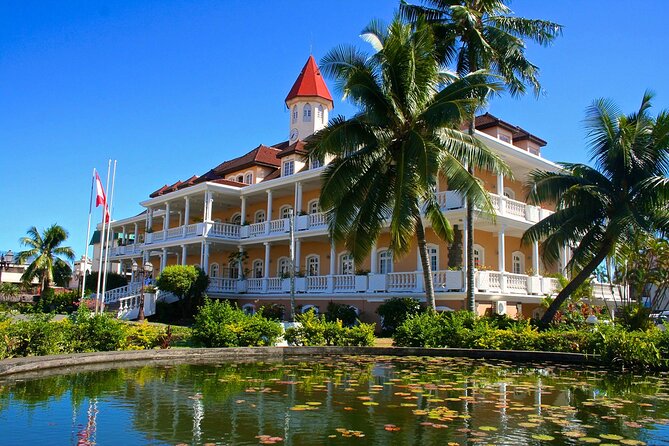
The final named stop is the Mairie de Papeete, or Papeete Town Hall. The planned time is about 15 minutes. Pauline presents it as a strong example of the island’s colonial architecture, with an imposing exterior that rewards a slower look.
Town halls are often easy to skip, especially when a city’s markets and waterfront seem more immediately appealing. Here, the building helps round out the tour’s historical arc. You have moved from exploration and missionary activity to traditional leadership, modern government, religion, and public administration.
The town hall also gives you a chance to compare official architecture with the more informal feel of the market. That contrast is one reason this route works. It does not show Papeete through only one lens.
Again, the time is brief. You should not expect a long architectural tour or a detailed interior visit. The stop is best understood as a final visual example of the city’s colonial-era public buildings.
How the Two Hours Are Actually Used
The listed schedule adds up clearly:
- Bougainville Park: 15 minutes
- Assembly of French Polynesia: 20 minutes
- Catholic Cathedral: 15 minutes
- Municipal Market: 20 minutes
- Papeete Town Hall: 15 minutes
- Walking and travel between places: 35 minutes
That totals two hours. The 35 minutes of movement matters. You are not spending the entire tour standing inside buildings. You are walking between central sights, hearing commentary along the way, and seeing how the different parts of downtown connect.
You should have a moderate level of physical fitness. The route is not described as strenuous, but it is a walking tour, and the schedule leaves little room for long rests. Wear comfortable shoes and bring water. An umbrella is not included, so bring your own if rain is possible. Papeete weather can change, and the tour continues outdoors.
The tour starts and ends at the same tourism office. That makes it easy to continue exploring afterward, return to a ship or hotel, or use the waterfront as your next reference point. The tour is also near public transportation, which adds flexibility before or after the walk.
Is $130 Per Person Good Value?

At $130 per person, this is not a budget walking tour. For two people, the listed price comes to $260 total. The cost needs to be judged against the format, not only the two-hour duration.
You are paying for a private experience limited to your party, direct time with Pauline, a planned route, historical interpretation, and free admission to the buildings included in the visit. A standard group walk might cost less, but it would not offer the same privacy or the same freedom to ask questions.
The value is strongest for couples, friends, or family members who want a personal introduction to Papeete and do not want a large group. It is also a sensible splurge if your time in the capital is short and you want a guide to put the city in context.
The value is weaker if you mainly want unstructured market time, shopping, or a relaxed stroll. The tour covers five stops in 120 minutes, so it favors range and explanation over lingering. You may still want to revisit the market or waterfront afterward.
Booking demand appears fairly early, with reservations averaging about 75 days in advance. That does not guarantee the tour will sell out on your dates, but it suggests you should reserve ahead, especially if you need a particular day or want to avoid a weekend substitution at the Assembly.
Who Will Get the Most From Pauline’s Tour?

I would recommend this experience to you if you:
- Want a short introduction to Papeete before exploring on your own.
- Enjoy history, government, religion, and architecture alongside markets.
- Prefer a private guide to a large group.
- Appreciate clear English explanations and visual material.
- Have only a few hours in the city.
- Want to ask personal questions about Tahiti and French Polynesia.
It may not be the best match if you want a slow food tour, extensive shopping time, or a full-day city experience. It also may disappoint anyone expecting long indoor visits at every building. The schedule is compact and purposeful.
The strongest praise centers on Pauline herself. Her historical explanations, friendly manner, excellent English, and use of tablet photographs were repeatedly singled out. That combination is important because Papeete’s story includes names, political changes, and religious shifts that are easier to follow when someone explains them clearly.
Practical Details Before You Reserve
Your confirmation arrives when you book, and the ticket is mobile, so you can keep the booking on your phone. The reservation uses local time and date. Check that carefully if you are booking from another country or arriving by ship.
The tour is private, and only your group participates. The maximum is two people, which makes the $130 per-person price easier to assess for a couple than for a solo visitor.
Free cancellation is available up to 24 hours before the start time for a full refund. Cancellations or changes made within 24 hours are not refunded or accepted. The cut-off follows Papeete local time.
Because the route is outdoors and requires walking, pack comfortable shoes and an umbrella. The provider does not include one. Public transportation is nearby, but the meeting and return point is specifically the Office du Tourisme on the waterfront.
Should You Book This Papeete Walking Tour?
Book it if you want a polished, private introduction to Papeete with real historical substance. The route gives you a useful city overview, while Pauline’s tablet photographs and clear English help make the past easier to picture.
The price is high for two hours, but the private limit of two changes the calculation. You are paying for personal attention rather than a long list of stops. If that matters to you, this is a strong choice, especially early in your stay when you want a guide to orient you.
Choose a weekday if the Assembly of French Polynesia matters to you. Choose the tour with realistic expectations about time: you will see a lot, but you will not linger everywhere. For couples who want history, local life, and a manageable walk in central Papeete, this is a worthwhile way to begin.
FAQ
How long is the private Papeete walking tour?
The tour lasts approximately two hours, including walking time between stops.
How many people can participate?
The tour is private and limited to a maximum of two participants.
What is the price?
The listed price is $130 per person.
Where does the tour begin?
It begins at the Office du Tourisme, Fare Manihini, on the Papeete waterfront at Boulevard de la Reine Pōmare.
Where does the tour end?
The activity ends back at the same meeting point.
Which places are visited?
The route includes Bougainville Park, the Assembly of French Polynesia, the Catholic Cathedral, the Municipal Market, and Papeete Town Hall.
Is admission included?
Yes. Free admission to all buildings visited is included.
What happens if the Assembly of French Polynesia is closed?
On weekends and public holidays, Jacques Chirac Place may be arranged as an alternative stop.
Do I need to bring an umbrella?
Yes, if you may need one. An umbrella is not included.
Can I cancel for a refund?
You can cancel at least 24 hours before the start time for a full refund. Cancellations or changes made less than 24 hours before the start time are not refunded or accepted.
Recently added around Papeete
- Tahiti: Northeast Coast Waterfalls&Viewpoints Half Day Tour★ 5.0 · 3 reviews
- Small Group Shared Tahiti Circle Island Waterfalls and Views★ 4.5 · 3 reviews
- Tahiti: Full Day Tour with Private Flight EN Cessna (Moorea & Tahiti)★ 3.5 · 3 reviews
- Papeete City Tour, 3hours (on Tahiti)★ 5.0 · 3 reviews
- Private Tour of Tahiti’s East Coast 3hours★ 5.0 · 4 reviews
- Tahiti : Tour de l’île (Full Day) avec taxi boat (Teahupoo)★ 5.0 · 5 reviews
- Private : Tahiti Museum & Circle Island Tour, Afternoon Tour (5h)★ 4.0 · 6 reviews
- Moorea Highlights Private Tour: Natural and Cultural Attraction★ 5.0 · 7 reviews
Walking Tours, compared.

Aqua Safari Introductory Helmet Dive (Underwater Walk)
Read our review →

Browse the lists this tour appears in