
Reviewed · WALKING TOURS
Shared 2 Hour Papeete Walking Tour
Papeete makes a fine first stop. This two-hour walk gives you a clear introduction to Tahiti’s capital, moving from Bougainville Park to the market, cathedral, government buildings, and yellow Town Hall. I like the compact route and the way it mixes history with everyday life. I also like that guide Pauline shares practical ideas for the rest of your stay. The main drawback is that some of the time may go toward maps and tablet visuals rather than seeing more streets.
The tour costs $58 per person, which is fair if you want context instead of simply taking photos and moving on. It is best suited to people with limited time, first-time visitors, and anyone who prefers a guide to handle navigation. You will need moderate fitness, shade and water planning, and a willingness to walk at a steady but comfortable pace.
In This Review
- Key points to know before you book
- Why a short walk is a smart way to meet Papeete
- Starting beside the waterfront at Bougainville Park
- At the Assembly, Tahiti’s political story comes forward
- The Catholic cathedral and Tahiti’s changing faiths
- The Municipal Market brings Papeete down to street level
- Finishing at the yellow Mairie de Papeete
- Pauline’s guiding style and use of visual aids
- What the $58 price buys you
- Who will get the most from this Papeete walk
- Booking flexibility and practical details
- Should you book the Papeete walking tour?
- FAQ
- How long does the Papeete walking tour last?
- Where does the tour start?
- Where does the tour finish?
- What sights are included?
- Is admission included?
- Is the tour offered in English?
- What is the cancellation policy?
Key points to know before you book
- A focused two-hour route: You cover five important Papeete sights without giving up a full day.
- Pauline is the main asset: Her French and English explanations combine history, culture, government, and daily life.
- The Municipal Market adds local color: It is the most practical stop for seeing different sides of Tahitian culture in one place.
- The route ends at Town Hall: The starting point is the Papeete Tourist Office, and the finish is Mairie de Papeete.
- Useful early-trip orientation: Pauline offers ideas for what to do during the rest of your French Polynesia stay.
- Small enough to stay personal: The maximum group size is 25, though a smaller group may feel more comfortable on narrow city streets.
Why a short walk is a smart way to meet Papeete
Papeete is easy to treat as a gateway to beaches, lagoons, and island excursions. That would be a mistake if you have even half a day to spare. The capital is where Tahiti’s Polynesian traditions, French administration, Christian history, colonial architecture, and modern daily life meet.
This tour gives you a quick framework for understanding the city. Instead of seeing a cathedral as simply an attractive building, you learn how Christianity arrived and changed island life. Instead of passing the Assembly of French Polynesia, you get an explanation of chiefs, monarchs, and present-day government.
I like that the experience is built around walking. At street level, you can notice details that disappear behind a vehicle window. The pace also leaves room for questions, although one four-star assessment found that too much time was spent looking at maps and a tablet. That is a useful warning for anyone who prefers constant movement.
The route is not designed to show every corner of Papeete. It is a compact introduction, not a full city expedition. You will see major civic and cultural sights, then finish with enough orientation to continue on your own.
More walks:
- Papeete : walking tour
★ 4.9 · 69 reviews - Private 2 Hour Walking Tour in Papeete
★ 5.0 · 8 reviews - Aqua Safari Introductory Helmet Dive (Underwater Walk)
★ 5.0 · 428 reviews
Starting beside the waterfront at Bougainville Park
Meet at the Office du Tourisme, also called Fare Manihini, on the Papeete waterfront. The address is on Boulevard de la Reine Pōmaré, in the Quartier du Commerce. This is a practical meeting point near public transportation and close to central Papeete.
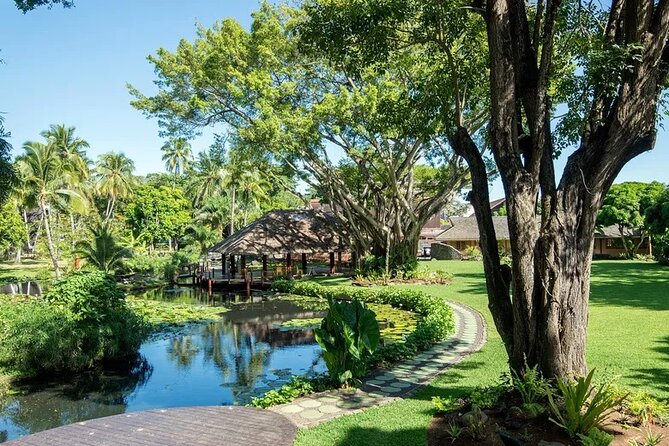
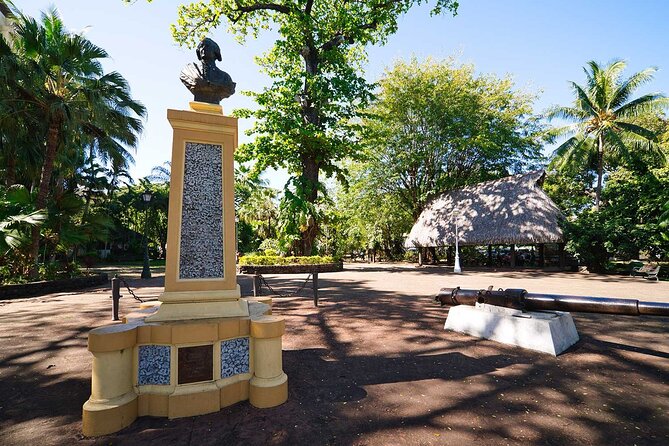
The first stop is Bougainville Park, known locally as Parc Bougainville. The visit lasts about 15 minutes and sets up the historical story of Tahiti. Here, the guide introduces Captain Bougainville, along with other explorers and missionaries who shaped the island’s contact with Europe.
This is a good opening because it places Papeete in a wider story. You begin with the people who arrived from outside, then move toward the island’s political, religious, and civic institutions. Pauline uses maps and tablet images to add background that may not be obvious from the park itself.
If you prefer a tour that starts with a dramatic viewpoint or a major monument, this opening may feel modest. Its value is context. You are not just checking off a green space. You are getting the first chapter before the walk turns to politics, religion, and city life.
At the Assembly, Tahiti’s political story comes forward
The next stop is the Assemblée de la Polynésie Française, with about 20 minutes set aside. This is where the tour shifts from European exploration to the way Tahitian authority developed over time.
The discussion covers chiefs, monarchs, and government across different periods. That matters because French Polynesia is not simply a tropical destination with French signs. Its political identity has older Polynesian roots and a modern French framework. A guide can explain that layered story in a way a quick look at a government building cannot.
I would pay close attention here if you want to understand how Tahiti functions today. The stop is especially useful for visitors who know little about French Polynesia beyond its geography. It gives you a stronger sense of place before you spend time on other islands.
The building itself may not be the most exciting visual stop on the route, and admission is listed as free rather than as a special interior visit. Think of this section mainly as a guided explanation, supported by the city surroundings and visual material. Pauline’s bilingual French and English delivery is helpful for mixed-language groups.
The Catholic cathedral and Tahiti’s changing faiths
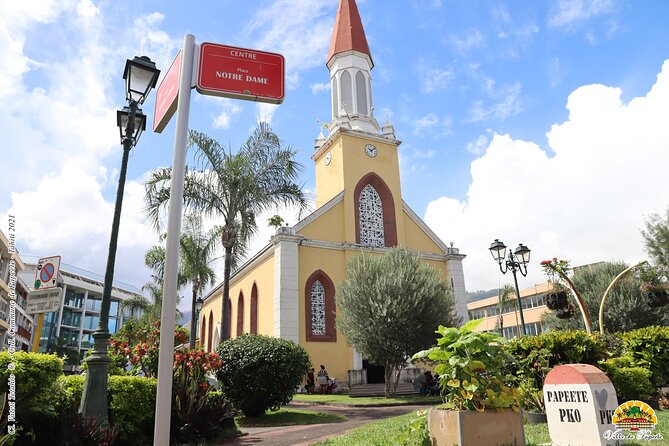
The Roman Catholic Archdiocese of Papeete comes next, for roughly 15 minutes. The focus is the Catholic Cathedral of Papeete and the arrival of Protestantism and Christianity in the islands.
Religion is central to understanding Tahiti’s past, so this is more than a quick architectural pause. The guide connects the cathedral to the larger religious changes that followed European contact. You get a clearer idea of how faith, missions, and island society became linked.
The stop should appeal to anyone interested in churches, social history, or the way outside influences changed Polynesian life. It also adds balance to the earlier political section. The tour is not only about buildings and famous names. It asks you to consider the forces that reshaped the city.
The cathedral visit is brief, so do not expect a long interior tour or a quiet period for personal reflection. The schedule keeps moving. That is useful when you have limited time, but it also means you will want to ask your questions as the guide speaks rather than save everything for later.
A few more ways to spend a day in Papeete
- 2 hours discovery tour of Moorea by Jet Ski
★ 5.0 · 63 reviews - Moorea Solo or Twin 2 hours Jet Ski Tour
★ 5.0 · 34 reviews - Eco guided excursion to the lagoon of Moorea in a transparent kayak Afternoon 2h
★ 5.0 · 23 reviews - Medium Magical Combo in Moorea of 2 hours of Jetski and 3h30 of Quad
★ 5.0 · 19 reviews
The Municipal Market brings Papeete down to street level

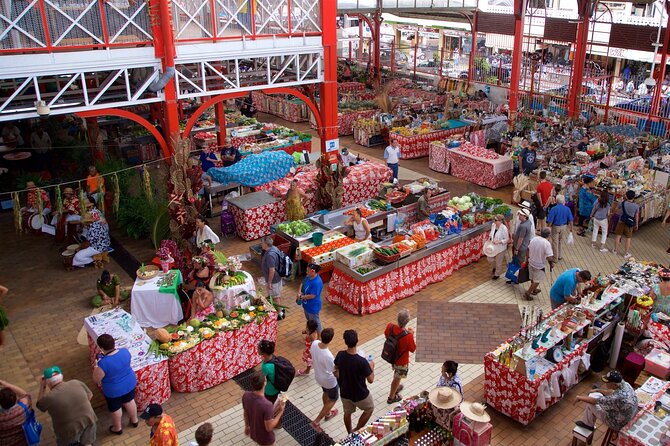
The Municipal Market receives about 20 minutes, and this is likely the most immediately engaging part of the route. Here, you move from formal institutions to the daily trade and food culture of Papeete.
The market is arranged in different zones that show several parts of Tahitian culture. The available information does not promise a specific tasting or shopping allowance, so treat this as a guided look rather than a market meal. Lunch, snacks, and bottled water are not included.
I like the market stop because it gives the tour a practical center. Government buildings and historic churches explain Papeete, but the market shows how the city feels in ordinary life. Pauline can help you understand what you are seeing and may point you toward useful ideas for the rest of your stay.
This is also where timing matters. One assessment recommended visiting in the morning or late morning to enjoy the monuments along the route. Market conditions and city activity can vary by time, but the tour’s own schedule suggests that an earlier start is sensible. You will also be walking in a warm climate, so morning can make the outing more comfortable.
Do not expect to linger for a long browse. Twenty minutes passes quickly, especially if you want to examine stalls or buy something. If the market is your main reason for booking, you may want to return on your own after the tour.
Finishing at the yellow Mairie de Papeete

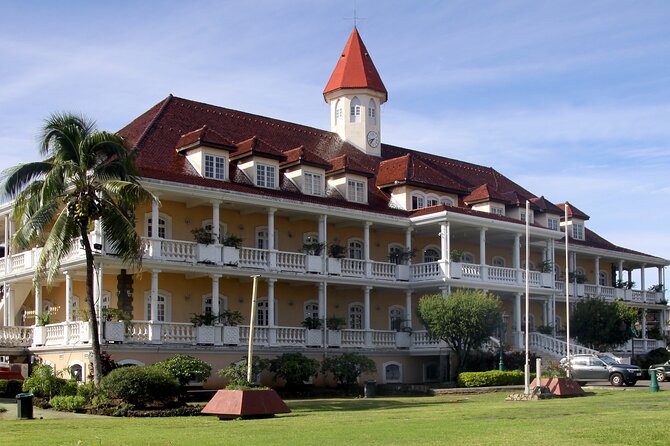
The final planned sight is Mairie de Papeete, or Papeete Town Hall. The stop lasts about 15 minutes and highlights the building’s colonial architecture. Its yellow exterior makes it one of the more recognizable civic sights in central Papeete.
This is a satisfying end because the route finishes with a strong visual landmark rather than fading out on a side street. The town hall also brings together several themes from the walk: public authority, French influence, and the development of Papeete as a capital.
The tour ends here, at Rue des Remparts, rather than returning to the waterfront starting point. That makes the walk useful for continuing into central Papeete. You can also use the finish to revisit the market or find your own way to the next activity, though no extra post-tour plan is included.
The listed schedule allows 35 minutes for travel time between the stops. That helps explain why five sightseeing sections fit into a two-hour experience. You are not spending 15 or 20 full minutes at every location in isolation. The walk between them is part of the tour, and the city streets provide some of the connective story.
Pauline’s guiding style and use of visual aids
The strongest thread in the available feedback is Pauline. She is described as engaging, warm, organized, and highly informed about Polynesian history and culture. Her English is strong, and she also speaks French, making the tour workable for bilingual groups.
Several comments praised the comfortable walking pace. That is important on a two-hour city tour. You are not being pushed through the route, but you are also not spending half the morning at one building. Pauline has even extended the time when needed to make sure the main material was covered, though you should not assume every departure will run long.
Her use of an iPad and maps is a real benefit for visual learners. Historical figures, old views, and geographic explanations are easier to follow when you can see a picture or map. It also helps when the subject is political change, since a building alone cannot tell the full story.
The trade-off is simple: visual aids take time. If you want to see as many streets as possible, you may find the tablet pauses a little long. If you want a clear explanation of why a place matters, those pauses are part of the value. I would tell Pauline early in the walk if you prefer more walking and fewer visual explanations.
What the $58 price buys you
At $58, this is not the cheapest way to walk around Papeete. You can see the outside of many central sights without paying for a guide. The price makes more sense if you place a value on local explanation, route planning, and a useful first orientation.
Admission to the buildings visited is included at no extra charge. The main purchase is Pauline’s time and interpretation, not entry tickets. That can be a good deal for a short stay, especially if you are arriving on a cruise, have only a morning free, or want to begin your holiday with a basic understanding of Tahiti.
I would compare the price with the cost of losing time to navigation. A self-guided walk might cover the same general area, but you would need to research the political and religious background yourself. You might also miss the practical suggestions Pauline gives for the rest of your trip.
Still, the tour is less appealing if you already know Papeete well or want a long, unhurried market visit. It also does not include water, snacks, lunch, or an umbrella. Bring your own supplies and plan around the weather.
The tour is often reserved about 45 days ahead. That pattern suggests booking early if your schedule is fixed, particularly if you need a specific date. The group limit is 25 people, so the experience may be more intimate than a large coach excursion, but the exact group size can vary.
Who will get the most from this Papeete walk
I would recommend this tour to first-time visitors who want a quick cultural foundation. It is also a strong choice for anyone staying in Papeete briefly, arriving before another activity, or looking for a guided introduction before making independent plans.
It suits you if you enjoy history, architecture, government, religion, and local life in equal measure. The tour is not built around beaches or scenic drives. Its rewards come from understanding what you see.
It can also help if you are unsure how to spend the rest of your time in Tahiti. Pauline’s suggestions have been especially useful to people who took the tour early in their holiday. Starting early lets you turn her advice into actual plans.
You should think twice if walking in warm conditions is difficult, if you want a slow photography tour, or if you dislike explanations supported by maps and a tablet. Moderate physical fitness is required, and there is no mention of dedicated shade, bottled water, or weather equipment being provided.
Wear comfortable walking shoes and bring water. An umbrella is not included, so pack one if rain is possible. The tour is near public transportation, which makes the central meeting point easier to reach, but you are responsible for getting to the Office du Tourisme on time.
Booking flexibility and practical details
Confirmation arrives when you book, and free cancellation is available until 24 hours before the scheduled start time. Within 24 hours, you receive no refund, and changes are not accepted. The cut-off follows Papeete local time, so check the time difference before making a late change.
The mobile ticket is convenient for keeping the booking on your phone. Save the meeting address before you leave your hotel or ship, since the start and finish are in different places.
The route begins at the Office du Tourisme, Fare Manihini, on the Papeete waterfront. It ends at Mairie de Papeete on Rue des Remparts. Since the walk does not return you to the starting point, plan your next stop from the Town Hall area.
The tour is approximately two hours. The five main stops total 85 minutes, while about 35 minutes is assigned to walking between them. That is a useful breakdown: you get a steady city walk, but not a marathon.
Should you book the Papeete walking tour?
Book it if you want a well-paced introduction to Papeete rather than a simple list of landmarks. Pauline’s strongest qualities are her clear explanations, bilingual communication, friendly manner, and practical suggestions. The route covers the city’s history, politics, religion, market life, and colonial architecture in one compact outing.
Skip it if you want extensive shopping time, a food tour, or a quiet self-guided stroll. The $58 price is justified by the local guidance and saved research time, but not by included admissions or meals.
For most first visits, I would schedule it early in your stay, ideally in the morning or late morning. You will get your bearings, learn what the major buildings mean, and leave with better ideas for the rest of Tahiti.
FAQ
How long does the Papeete walking tour last?
The tour lasts approximately two hours. About 35 minutes of that time is used for walking between the main stops.
Where does the tour start?
It starts at the Office du Tourisme, Fare Manihini, on the Papeete waterfront at Boulevard de la Reine Pōmaré, in the Quartier du Commerce.
Where does the tour finish?
The walk ends at Mairie de Papeete, or Papeete Town Hall, on Rue des Remparts.
What sights are included?
The route includes Bougainville Park, the Assemblée de la Polynésie Française, the Roman Catholic Archdiocese of Papeete and cathedral, the Municipal Market, and Mairie de Papeete.
Is admission included?
Yes. Admission to all the buildings visited is included at no additional charge.
Is the tour offered in English?
Yes. Pauline guides in English and French.
What is the cancellation policy?
You can cancel up to 24 hours before the local start time for a full refund. Cancellations or changes made within 24 hours are not accepted, and the amount paid is not refunded.
Recently added around Papeete
- Tahiti: Northeast Coast Waterfalls&Viewpoints Half Day Tour★ 5.0 · 3 reviews
- Small Group Shared Tahiti Circle Island Waterfalls and Views★ 4.5 · 3 reviews
- Tahiti: Full Day Tour with Private Flight EN Cessna (Moorea & Tahiti)★ 3.5 · 3 reviews
- Papeete City Tour, 3hours (on Tahiti)★ 5.0 · 3 reviews
- Private Tour of Tahiti’s East Coast 3hours★ 5.0 · 4 reviews
- Tahiti : Tour de l’île (Full Day) avec taxi boat (Teahupoo)★ 5.0 · 5 reviews
- Private : Tahiti Museum & Circle Island Tour, Afternoon Tour (5h)★ 4.0 · 6 reviews
- Moorea Highlights Private Tour: Natural and Cultural Attraction★ 5.0 · 7 reviews
Walking Tours, compared.

Aqua Safari Introductory Helmet Dive (Underwater Walk)
Read our review →


Browse the lists this tour appears in