
Reviewed · WHALE WATCHING
Whale watching 6 people half day
Whales can turn a morning into a story. This Moorea outing pairs small-group whale watching with the chance to enter the water under careful guidance, which gives you a closer look at these remarkable animals. I especially like the crew’s calm, respectful approach and the naturalist briefing that explains whale behavior before anyone gets near the water. The main caution is simple: you need to feel comfortable in the open ocean, and neither whale sightings nor swimming is guaranteed.
The four-hour trip is also flexible in a useful way. The crew follows the animals and sea conditions rather than forcing a rigid schedule, and non-swimmers can remain on the boat with the captain. Seasickness is the other practical concern, since rough water is possible and one participant strongly recommended taking medication before departure.
In This Review
- Key things to know before you book
- Setting out from Moorea Marina
- The briefing before meeting the whales
- Searching Moorea’s waters for humpback whales
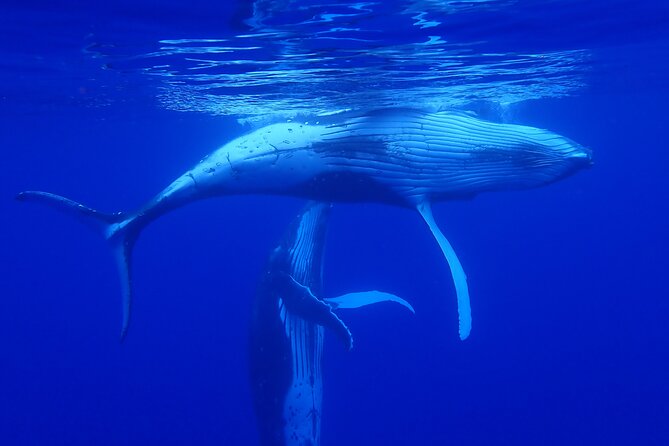
- Entering the water with whales
- What the wildlife encounter can look like
- The small group and the crew’s role
- Weather, sea conditions, and comfort
- Is $273.29 a fair price?
- Who should book this Moorea whale tour?
- Should you book it?
- FAQ
- Where does the whale-watching tour begin?
- Where does the activity end?
- How long does the experience last?
- Is swimming with the whales guaranteed?
- Can non-swimmers join?
- What swimming ability is required?
Key things to know before you book
- A maximum of six participants: The small group allows the guide to give clear instructions and keeps the encounter more personal.
- Humpback whales are the main target: You may also see dolphins, sperm whales, flying fish, and hunting seabirds.
- Swimming requires real ocean comfort: You should be in good physical condition and comfortable using fins, a mask, and a snorkel.
- The crew puts animal welfare first: The guide studies behavior and makes slow, gentle approaches rather than chasing animals.
- The experience lasts about four hours: The exact length can range from three to four hours depending on weather and animal activity.
- The meeting point is Moorea Marina: The tour returns to the same marina in Opunohu.
Setting out from Moorea Marina
Your morning begins at Moorea Marina, BP 1173, Opunohu 98729. The experience ends back at this same meeting point, so you do not need to arrange a separate return transfer from the water.
The central appeal is the small scale. The maximum is six paying participants, which matters on an activity where instructions, timing, and water entry must be managed carefully. A guide can give more attention to each person, and you are less likely to feel lost in a crowd when the boat stops near a whale.
The boat and exact departure setup can vary. One account describes a larger Zodiac-type boat with two crew members, while another mentions a sailing trip of six hours. The standard description for this product is a three-to-four-hour outing, so I would plan around the stated four-hour duration rather than expect a full-day cruise or sunset sail.
The crew includes experienced guides and captains. Doris is praised for her patience and clear explanations, while Jay and Sebastian are also singled out for their care and professionalism. The names may vary by departure, but the repeated theme is a crew that treats this as a wildlife encounter, not a guaranteed amusement ride.
More Whale Watching in Moorea
- Swimming with Whales in Moorea (Half Day tour)
★ 4.5 · 264 reviews - Humpback whale watching and marine life in Moorea
★ 5.0 · 199 reviews - Half day whale tour 4h00
★ 4.5 · 181 reviews
The briefing before meeting the whales
Before you approach the animals, the naturalist guide explains whale behavior and the rules for entering the water. This is one of the most important parts of the trip. You are not simply handed a mask and told to follow a whale.
The guide may explain the difference between a whale resting, traveling, singing, or staying with a calf. You might encounter a lone whale, a group, a mother and young calf, a singing male, or a pair involved in courtship behavior. These situations call for different levels of patience and different approaches.
The crew also explains how to behave in the water. You should expect to wait for the right moment rather than rush toward an animal. If a whale changes direction or leaves, the boat will not force the encounter. One participant described entering the water only to have the whale move away, a useful reminder that wild animals do not follow a schedule.
I like this approach because it gives you a better chance of understanding what you are seeing. A tail slap or breach is exciting, but learning why a whale is resting or singing makes a quiet encounter just as meaningful.
Searching Moorea’s waters for humpback whales
The search itself is part of the experience. The crew watches the sea and studies animal behavior, looking for humpback whales and other marine life. Conditions can be calm or rough, and the boat may need to cover open water before locating animals.
The possible sightings extend beyond humpbacks. You could encounter globicephala, also known as pilot whales, long-beaked dolphins, narrow-beaked dolphins, sperm whales, flying fish, and seabirds hunting over the water. None of these sightings is promised, but the variety gives the outing more depth than a single-species search.
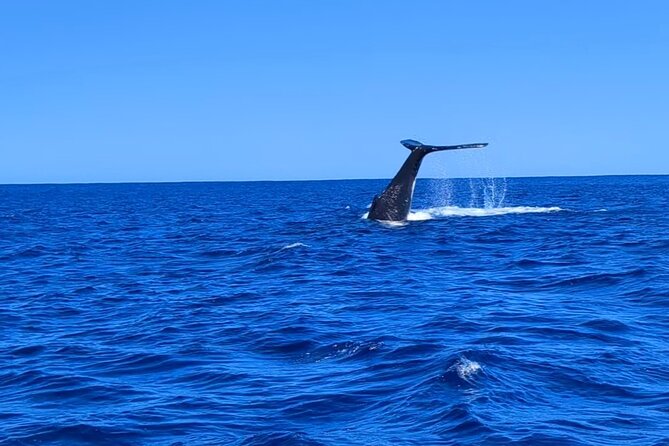
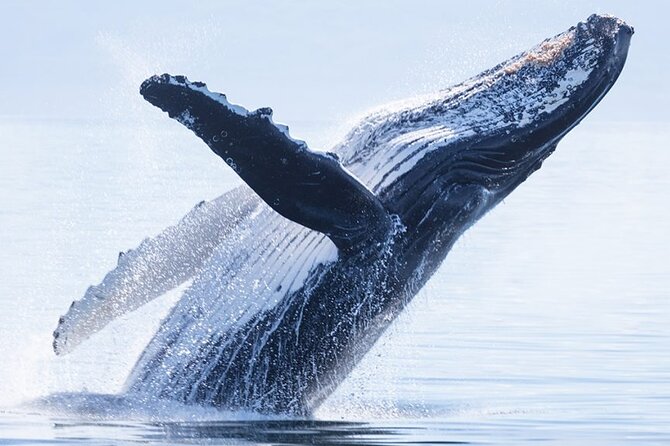
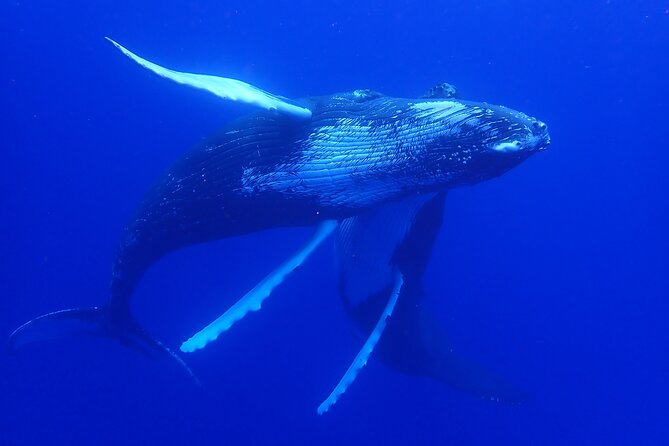
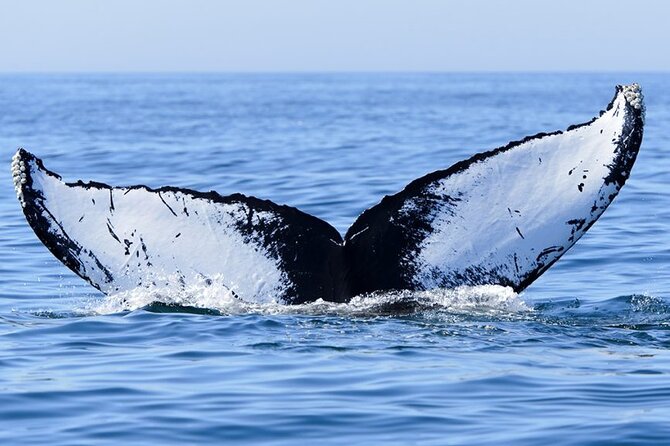
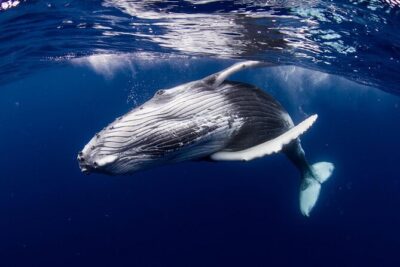
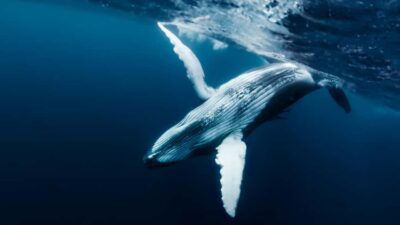
The most memorable encounters described include a mother and calf, whales breaching at a distance, tail slaps, and a male singing underwater. You might see a whale from the boat without entering the sea at all. That can still be a rewarding result, especially if you hear the animal singing or watch it circle, surface, and disappear.
The four-hour format works well for a half-day plan, but it also means conditions matter. The advertised duration is approximate, and the crew may finish after three hours or continue closer to four, depending on weather and animal activity. I would avoid booking another fixed activity immediately afterward.
Entering the water with whales
If conditions permit, the crew may launch the boat and let you enter the water near the animals. This is not an ordinary snorkel stop. You are entering the ocean for a controlled wildlife encounter, and the guide decides when it is suitable.
You need good physical condition and genuine comfort in open water. The requirements specifically include swimming with fins and using a mask and snorkel. Being able to float in a hotel pool is not the same as managing yourself in moving seawater while following instructions.
The crew’s method is slow and gentle. You may wait on the surface while the guide watches the whale’s behavior, then move only when the situation is appropriate. That patience protects both you and the animals. It also means the most exciting moment may be brief, quiet, and unpredictable.
Swimming with a whale is never guaranteed. You might see several whales from the boat but never enter the water. You might enter the water and have the animal leave. I consider this a strength of the operation, not a weakness, because the crew does not promise control over wild behavior.
Non-swimmers can stay aboard with the captain. This makes the outing workable for a mixed group, although a non-swimmer should understand that the main special feature is the chance to enter the ocean. From the boat, you may still watch breaches, tail slaps, circling, and other surface behavior.
More whale trips:
- Private tour observing and swimming with humpback whales in Moorea
★ 5.0 · 126 reviews - Half Day Small Group Whale Watching
★ 5.0 · 88 reviews - Whale watching and snorkelling in Moorea
★ 5.0 · 64 reviews - Whale watching in Moorea
★ 5.0 · 58 reviews
What the wildlife encounter can look like
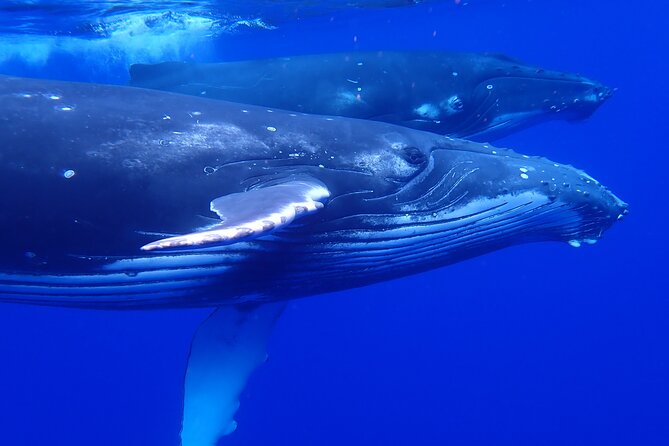
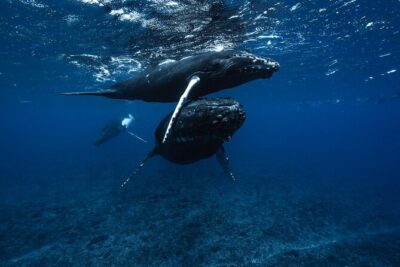
Humpback behavior changes from one outing to the next. A mother and calf may remain close together. A male may sing below the surface. Several males may compete for a female, or a whale may rest quietly and offer little surface action.
The crew’s job is to read these signs and decide how to proceed. A respectful guide may spend time waiting, repositioning, or leaving an animal alone. This can feel slower than a typical sightseeing cruise, but it gives the encounter a more natural rhythm.
The most praised feature is the crew’s respect for the whales. Doris is described as patient and gentle, with clear explanations about how to approach the animals. Jay’s affection for whales also comes through in the way he explains their behavior and safety rules. That kind of care matters because it shapes the entire mood of the trip.
I would value a close, calm encounter over a rushed photograph. You may get a dramatic tail slap or breach from the boat, but you should also be ready for a quiet moment when the whale surfaces far away. Nature is generous on its own terms, not on a tour timetable.
The small group and the crew’s role
A maximum of six participants is a strong point for this experience. The guide can keep track of everyone in the water, answer questions, and adjust the pace to suit the conditions. You also avoid the impersonal feel of a large boat packed with people competing for the same view.
The crew appears to divide responsibilities between guiding and piloting. Jay and Sebastian are specifically praised together, while Doris is repeatedly noted for her patience and ability to explain whale behavior. The exact crew member on your departure may differ, but you can expect a team with experience in both safety and wildlife observation.
The naturalist side of the trip is just as important as the boat ride. You can ask questions about humpbacks, calves, singing, courtship, and other behavior. That information helps you make sense of what happens instead of simply waiting for a whale to perform.
The small group does not remove the physical demands. A rough sea can make the ride tiring, and one participant reported severe seasickness despite considering the outing worth the effort. If you are prone to motion sickness, take your usual preventive medicine before departure, as one direct recommendation suggests.
Weather, sea conditions, and comfort
This is an open-ocean activity, so the water may be rough. A larger Zodiac-type boat was described as stable and able to make good time in high waves, but stability does not mean the ride will feel smooth.
You should arrive ready for changing conditions. The tour can be canceled for poor weather, with the option of another date or a full refund. That policy protects you from being sent out when the sea is unsuitable, but it also means your schedule needs some flexibility.
The activity calls for moderate physical fitness, with stronger wording about good physical condition and comfort using fins in the ocean. I would not book it casually if you are anxious in open water, have difficulty swimming with fins, or are unsure how your body handles boat motion.
The description does not specify every item provided aboard, so you should confirm practical details with Mori Ora before departure if you need certainty about equipment, clothing, or refreshments. The known requirement is clear: you need to be comfortable with a mask, snorkel, and fins.
Is $273.29 a fair price?
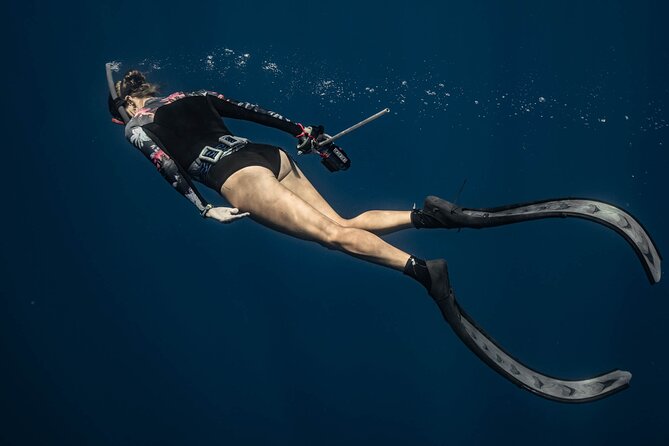
At $273.29 per person, this is not a bargain boat ride. The price reflects a small group capped at six, specialist guiding, and the chance to enter the water near humpback whales. You are paying for a more personal wildlife encounter rather than a simple sightseeing cruise.
The value depends on your priorities. If you want a guaranteed swim, a fixed route, or a low-cost way to spend a few hours at sea, this may feel expensive. If you care about careful wildlife practices, direct access to a naturalist guide, and a smaller group, the cost is easier to justify.
The chance to see whales from the boat helps protect the value of the trip. You do not need to swim for the outing to produce memorable moments. A mother and calf, a singing male, a breach, or a long tail slap can all happen without you leaving the boat.
Still, you should treat the price as payment for time and expertise, not a ticket to a guaranteed spectacle. The animals decide what happens. That is the honest trade-off with responsible wildlife viewing.
Who should book this Moorea whale tour?
I would recommend it most strongly to confident swimmers who enjoy nature more than polished entertainment. You should be happy to wait, follow instructions, accept changing sea conditions, and let the guide set the pace.
It also suits couples or friends with mixed swimming ability. A non-swimmer can watch from the boat with the captain, while a stronger swimmer may enter the water if conditions allow. Just make sure everyone understands that the boat view and the in-water experience will be different.
Families or less confident swimmers should think carefully about the physical requirements. The maximum group size is appealing, but the open ocean and possible rough water are serious considerations. This is not a gentle lagoon float.
I would also book it early if whale encounters are a major part of your Moorea plans. The six-person limit keeps the outing personal, but it also limits availability. Confirmation is provided within 48 hours of booking, subject to availability, so build some flexibility into your plans.
Free cancellation is available up to 24 hours before the start time for a full refund. Changes or cancellations inside that window are not accepted, and a weather or minimum-participant cancellation brings an alternate date or full refund.
Should you book it?
Book this tour if you want a careful, intimate whale encounter and you are comfortable in the open ocean. The strongest reasons are the six-person limit, the patient guides, the clear safety briefing, and the crew’s willingness to let whales set the terms.
Skip it if you need calm water, guaranteed swimming, or a predictable sightseeing route. If you do book, prepare for seasickness, leave room in your schedule, and judge success by the quality of the encounter, not by whether a whale performs on cue.
FAQ
Where does the whale-watching tour begin?
It begins at Moorea Marina, BP 1173, Opunohu 98729, French Polynesia.
Where does the activity end?
The tour returns to Moorea Marina, the same point where it begins.
How long does the experience last?
The activity lasts about four hours, although the stated duration can range from three to four hours depending on weather and animal activity.
Is swimming with the whales guaranteed?
No. Swimming with wildlife is never guaranteed. The crew will make every reasonable effort to create an encounter, but the animals and sea conditions determine what happens.
Can non-swimmers join?
Yes. Non-swimmers can remain on the boat with the captain and observe the animals from there.
What swimming ability is required?
You should be in good physical condition and comfortable swimming in the ocean with fins, a mask, and a snorkel. The group has a maximum of six participants.
More Half-Day
- Franckyfranck Tours Moorea – Half day Tours
★ 5.0 · 817 reviews - Half Day Tour : Moorea Snorkeling & Sailing on a Catamaran named Taboo
★ 5.0 · 529 reviews - Moorea: Half-Day Open-Air 4WD Safari with Hotel Transfers
★ 4.6 · 240 reviews - Half-Day Guided Hike to Afareaitu Waterfall
★ 5.0 · 177 reviews
Recently added around Moorea
- 2-hour Private Sunset Cruise★ 5.0 · 3 reviews
- Private Guided Tour around the Moorea Island★ 5.0 · 3 reviews
- Lagoon and Marine Wildlife Tour in Moorea★ 5.0 · 3 reviews
- Whale Watching Shared Half Day★ 5.0 · 3 reviews
- Watch and Swim with Humpback Whales in Moorea★ 5.0 · 3 reviews
- 4 Hour Ariki Fishing Activity in Moorea★ 5.0 · 3 reviews
- Yoga at sunrise at Sofitel Moorea, overlooking Tahiti★ 5.0 · 3 reviews
- Unique photo shoot in the heart DE Moorea: Beach & mountain combo★ 5.0 · 3 reviews
Whale Watching, compared.
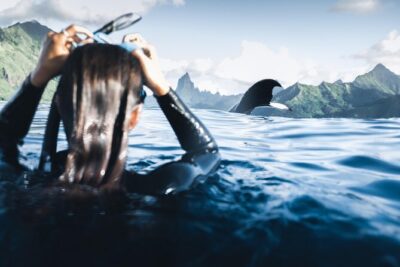
Swimming with Whales in Moorea (Half Day tour)
Read our review →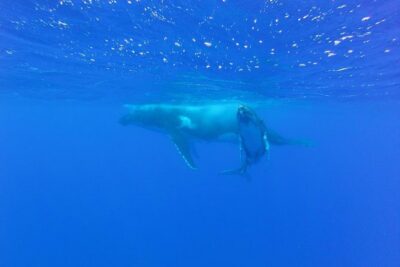
Humpback whale watching and marine life in Moorea
Read our review →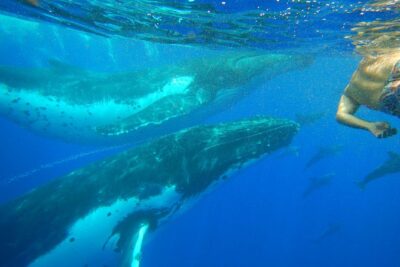
Private tour observing and swimming with humpback whales in Moorea
Read our review →
Browse the lists this tour appears in